

























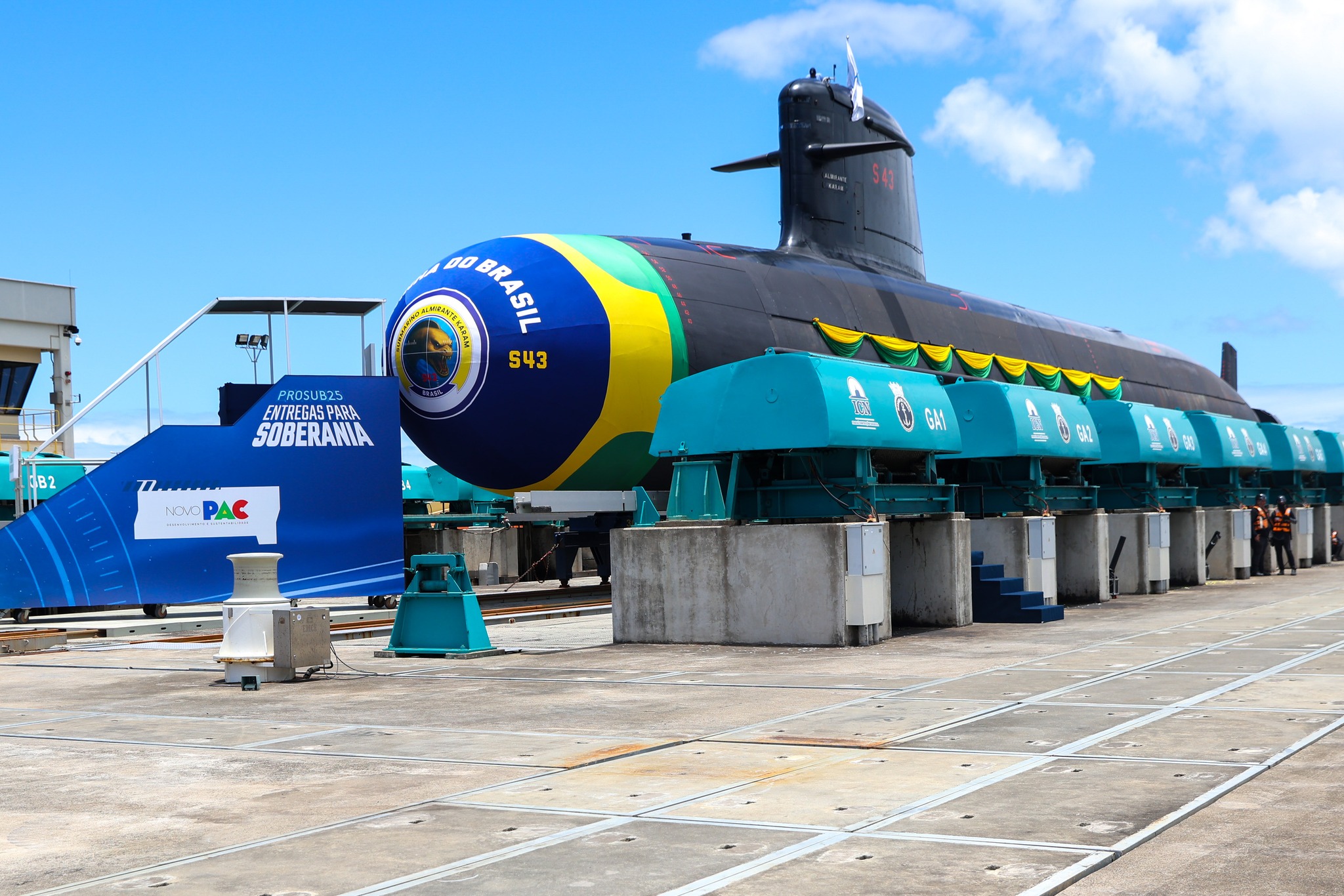
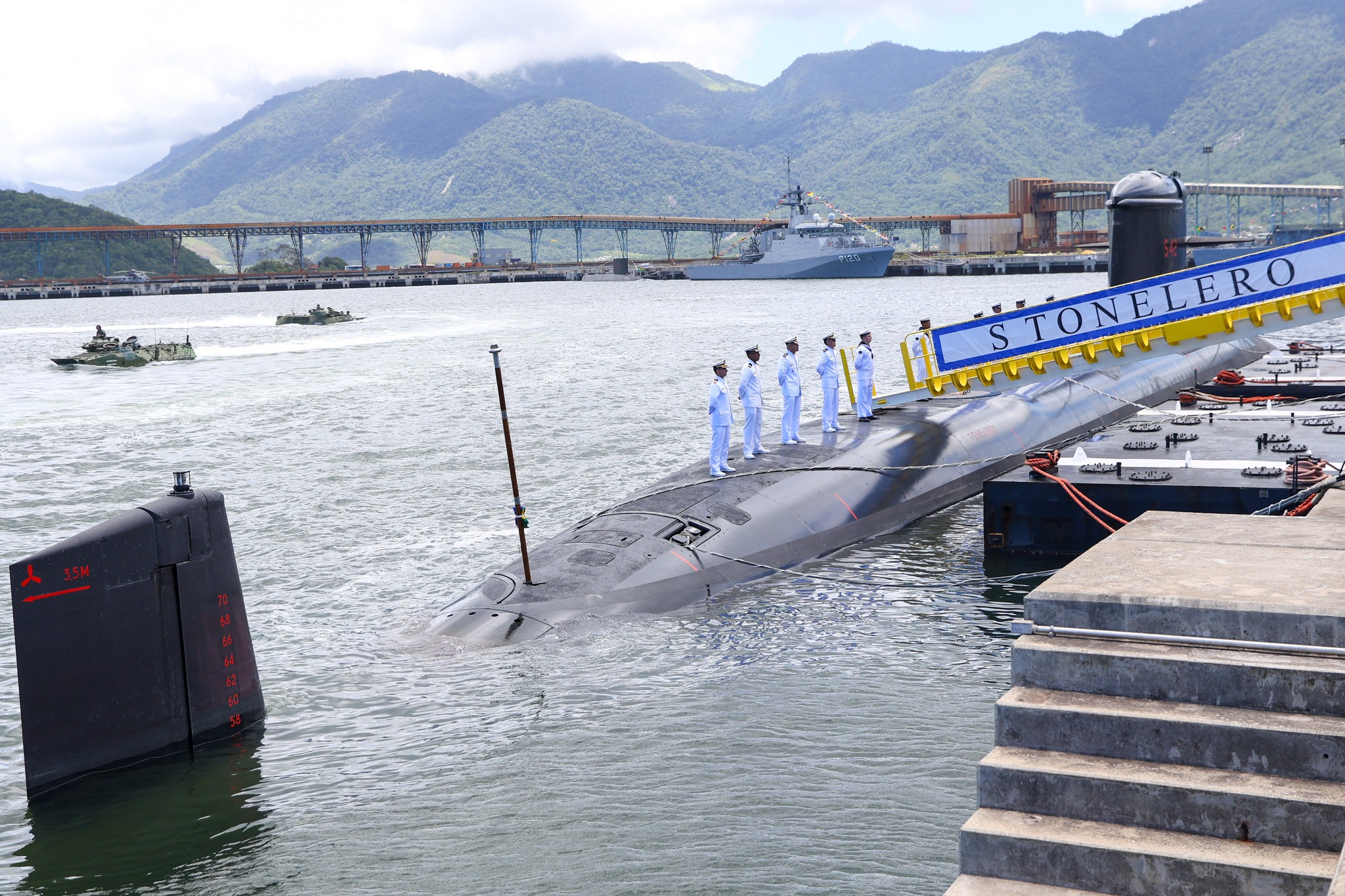
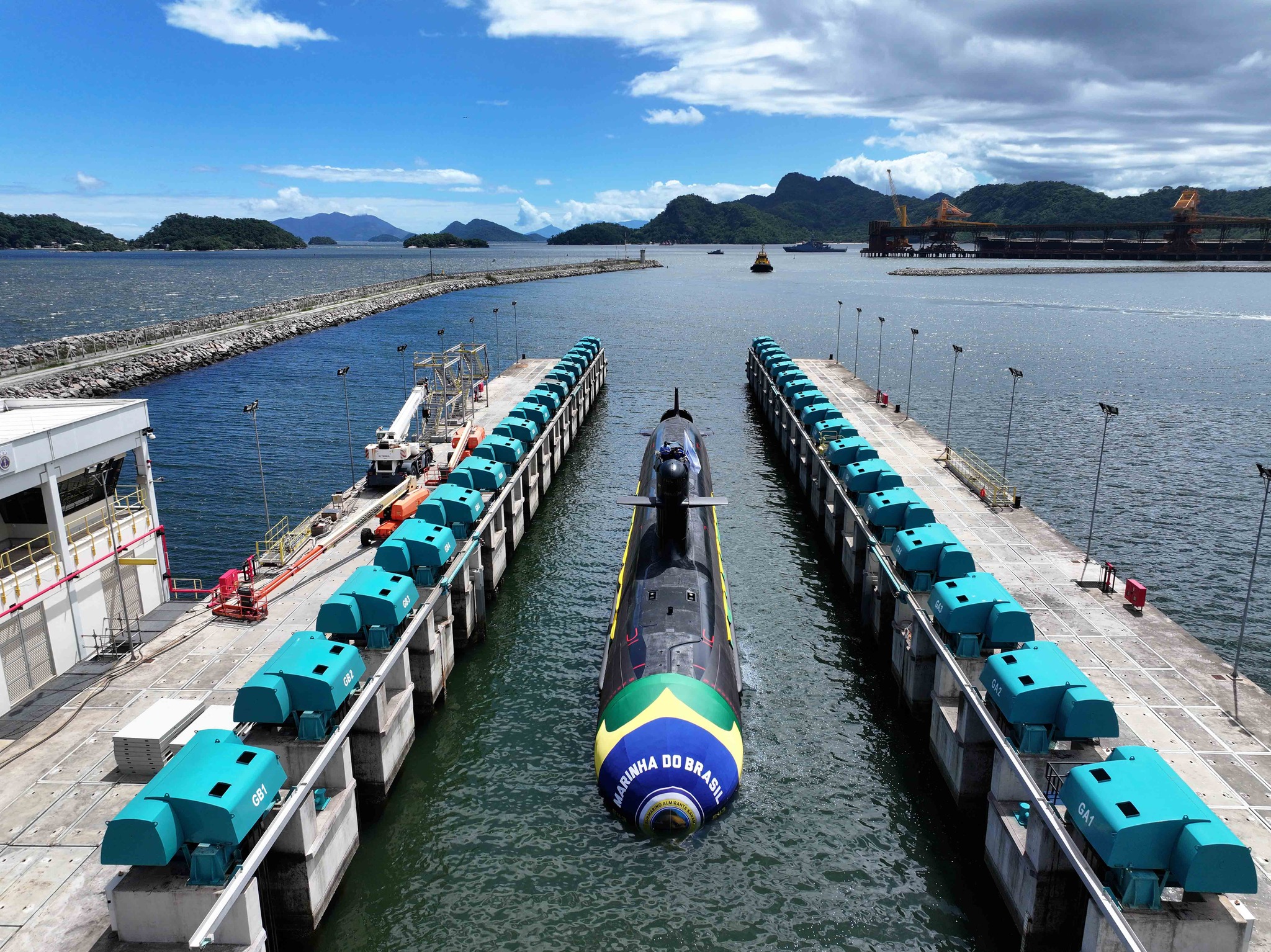
On Wednesday, 26 November 2025, as announced by the French company Naval Group, a ceremony was held at the Brazilian naval shipyard Itaguaí Construções Navais in Rio de Janeiro to mark the commissioning of the submarine Tonelero (S42) and the launching of its sister ship Almirante Karam (S43). These are the third and fourth Riachuelo/Scorpène-class submarines for the Brazilian Navy (Marinha do Brasil) under the PROSUB program (PROgrama de Desenvolvimento de SUBmarinos).
 Photos: Naval Group
“We are honored to contribute to strengthening Brazil’s maritime sovereignty. More than delivering submarines, our mission is to build, together with Brazil, a long-term technological and industrial legacy. Our partnership with the Brazilian Navy is a prime example of strategic cooperation between nations that share common values and objectives in the global arena,” said Pierre Éric Pommellet, CEO of the Naval Group.
The PROSUB program is being carried out under a 2009 contract with the French company DCNS (now Naval Group), worth 9.9 billion USD, and includes the delivery of four Scorpène CM-2000 submarines in the extended-hull S-BR variant. The domestic contractor for the program is the shipbuilding group Construtora Norberto Odebrecht (CNO).
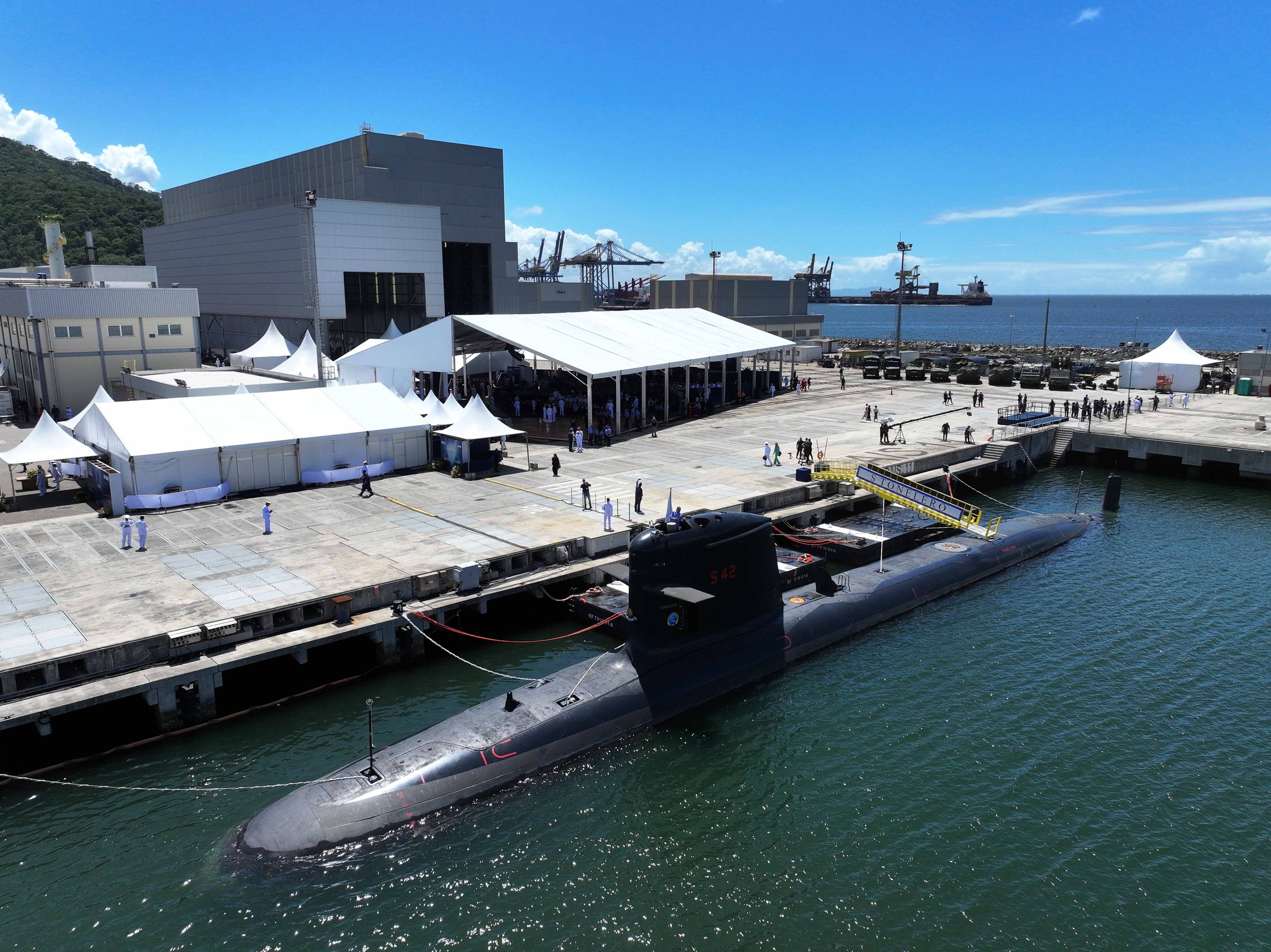
The prototype Riachuelo (S40) entered service in September 2022, while the second submarine, Humaitá (S41), did so on 12 January 2024. The keel of the Tonelero (S42) was laid on 13 January 2015, and it was launched on 27 March 2024. The Almirante Karam (S43), previously referred to under the working name Angostura, has been under construction since 2018, with delivery to the customer expected in 2026.
The Brazilian variant of the Scorpène, designated S-BR, has the largest dimensions among the available versions: 75 m in length and a displacement of 2,000 metric tons. For comparison, the CM-2000 variant for Chile and Malaysia (two submarines each) measures 67.4 m and displaces 1,738 metric tons, while the AM-2000 variant, known as Kalvari for India (six submarines planned), is 67.5 m long with a displacement of 1,775 metric tons. Naval Group’s offer also includes a smaller, not yet produced version, the Scorpène 1000, with a length of 50 m and a displacement of 1,000 metric tons.
Work has also begun on the first Brazilian nuclear-powered submarine, SN-BR, which will be named Álvaro Alberto (SN-10) and will measure 100 m in length with a displacement of 6,000 metric tons. The cutting of the first steel plates took place on 12 June 2024, and the keel laying is expected later this year, so that the launching can take place in 2029 and commissioning between 2032 and 2034, depending on the progress of sea trials. In reality, it will be an even further enlarged Scorpène with a new propulsion system.
Meanwhile, in April 2024 Indonesia ordered two submarines in the latest Scorpène Evolved Full Lithium-Ion battery (LiB) version, which had also been unsuccessfully offered in the Polish Orka program, decided yesterday, for the delivery of three units, in which the Swedish offer from Saab Defence and Security with the A26 Oceanic emerged victorious.
It is worth adding that, in parallel, Naval Group has qualified several local suppliers, integrating them into its supply chain not only for the needs of the PROSUB program but also with future business opportunities in mind.
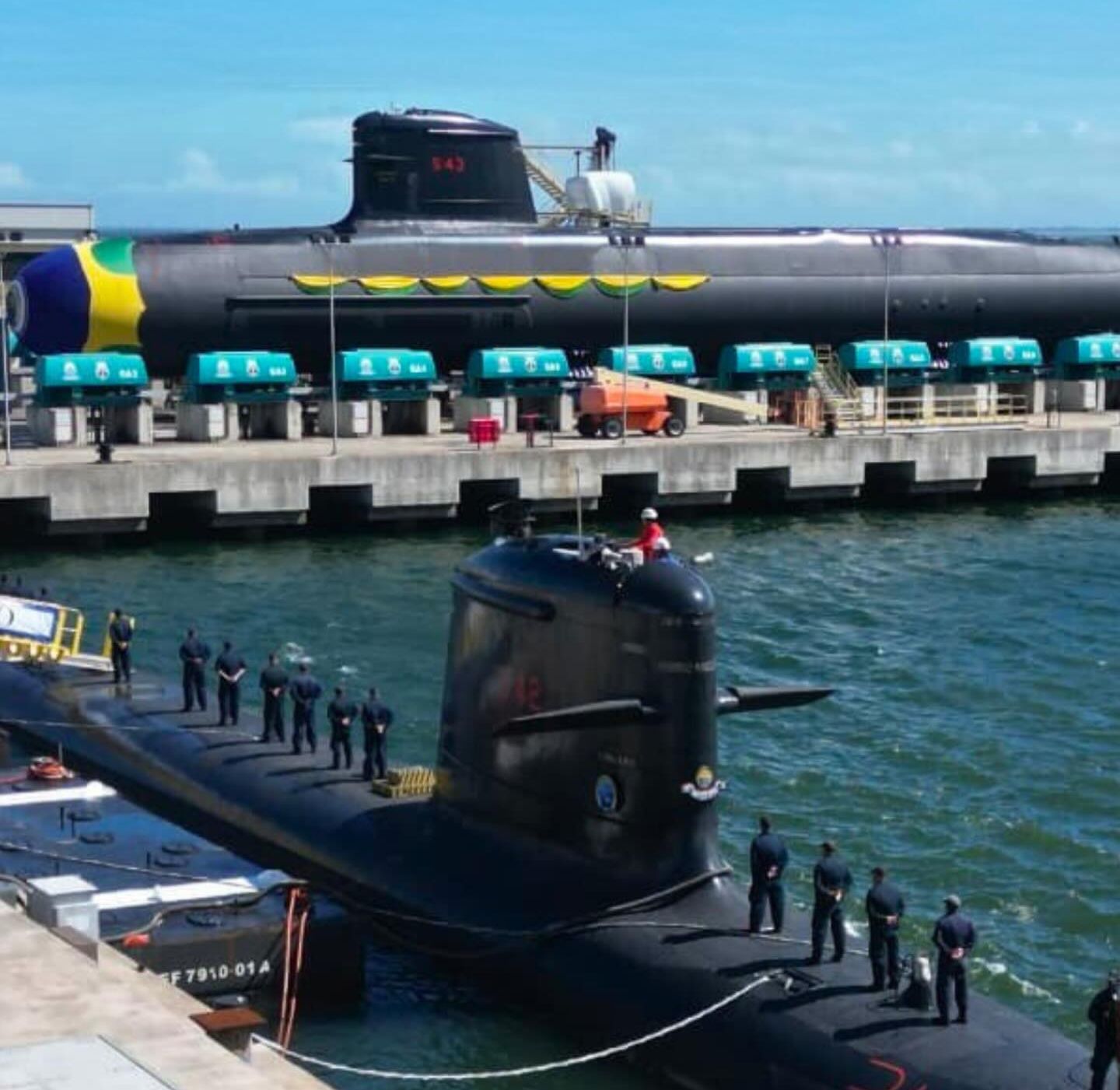
Delivery of the third and launching of the fourth Scorpène®submarines for the @marmilbr .
These two major milestones underline the strong technological progress of the Brazilian Navy and the strengthening of its operational capabilities.
©Leo Lemos & Wagner Meier pic.twitter.com/gluBUDJKGw
— Naval Group (@navalgroup) November 27, 2025
