





























On Thursday, 20 November 2025, the UK Ministry of Defence announced that it had awarded a 316 million GBP contract to MBDA UK (which leads a consortium of six other entities: BAE Systems, QinetiQ Group, GKN Aerospace, Arke, Marshall Aerospace and Defence Group, and Leonardo Airborne & Space Systems) for the serial production and delivery of the DragonFire naval laser-weapon system under the Laser Directed Energy Weapon (LDEW) program.
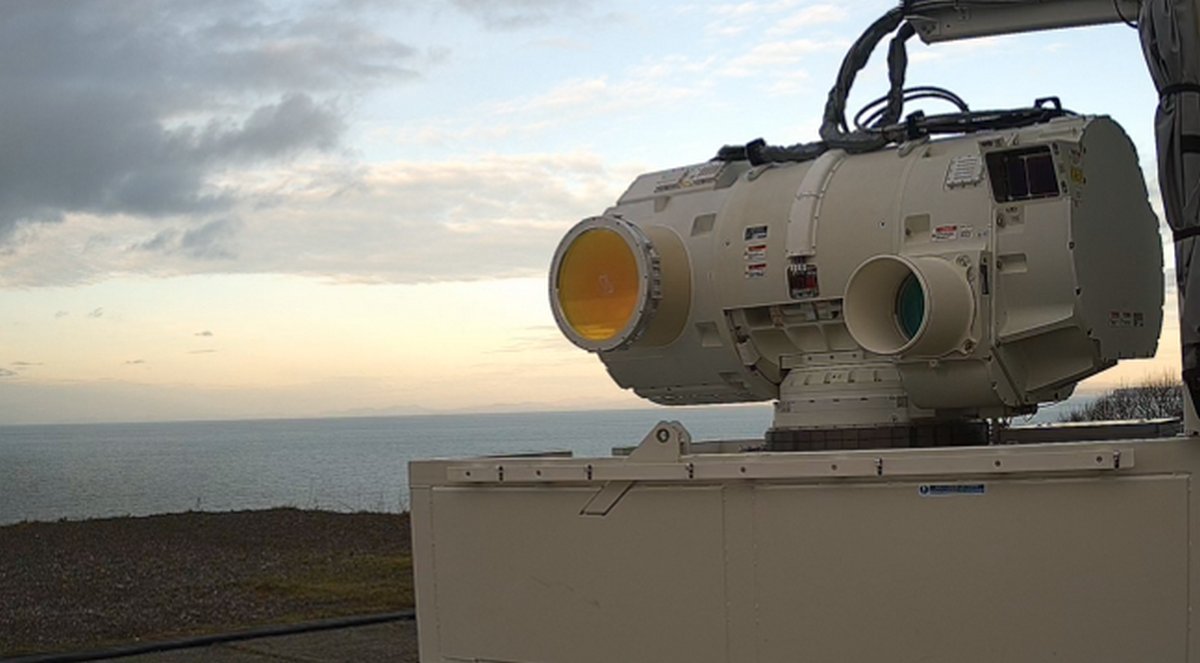 Photo: QinteiQ
The order is being carried out as part of the 2025 Defence Strategic Review (SDR), published on 2 June of this year, which includes a total of 62 recommendations for the development of the UK Armed Forces under the government’s Plan for Change.
The review announced investments worth the equivalent of 1 billion GBP in high-energy laser-weapon systems, which will enable the creation of 590 highly skilled new jobs, including 200 in Scotland, 185 in southwest England, and 75 in eastern England. In addition to the naval DragonFire system, this will include the land-based HELWS (High-Energy Laser Weapon System).
DragonFire will enter service with the first Type 45 Daring–class destroyer in the Royal Navy in 2027. Interestingly, the program has been significantly accelerated, as announced on 12 April 2024 – the original plan called for the system to be fielded only in 2032.
In the 2030s, the laser will be introduced on six new Multi-Role Support Ships (MRSS). Its integration is also being considered, either on a temporary basis with Type 23 Duke–class frigates or, ultimately, with the future Type 26 City–class or Type 31 Inspiration–class frigates.
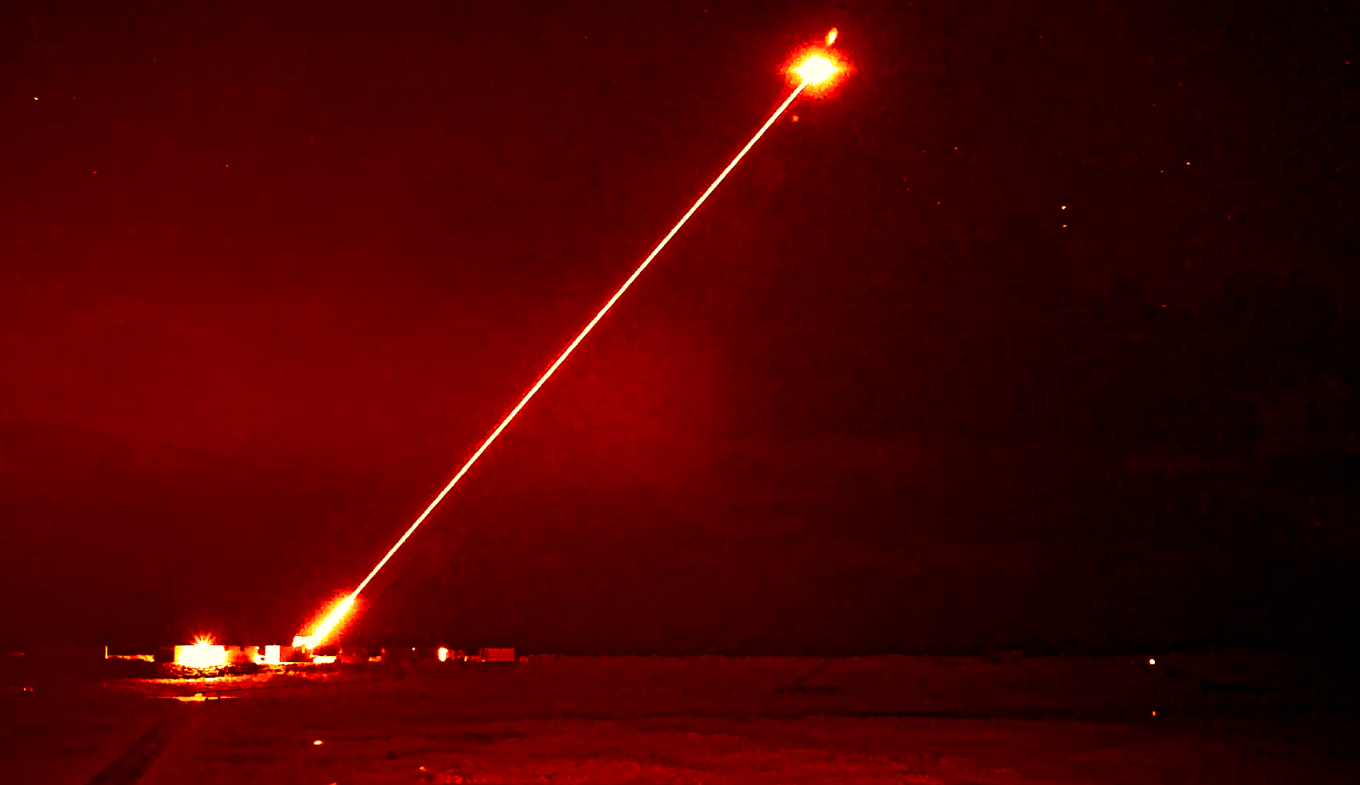
The serial-production order follows a recent test at the military range in the Western Isles (Outer Hebrides) in Scotland, during which a high-speed jet-powered unmanned aerial vehicle traveling at up to 650 km/h was neutralized.
Minister for Defence Readiness and Industry, Luke Pollard MP, said:
“This high-power laser will see our Royal Navy at the leading edge of innovation in NATO, delivering a cutting-edge capability to help defend the UK and our allies in this new era of threat.”
Chris Allam, MBDA UK Managing Director, said:
“This latest contract for DragonFire is another significant milestone. It allows us to continue with the next phase of the programme and re-affirms the UK’s intent to be at the forefront of laser directed energy weapons. The success of recent DragonFire trials are a testament to our MoD and Industry team delivering a truly game-changing weapon system into the hands of the Royal Navy.”
Steve Wadey, Group CEO, QinetiQ, said:
“The DragonFire programme is delivering the ambition of the Strategic Defence Review, with industry experts working in collaboration with government to get disruptive, next generation technology into the hands of our warfighters at pace. QinetiQ is proud to have played a unique role in developing and testing this critical military capability of the future. We welcome the government’s latest commitment, which will enable us to accelerate the production of the world-leading technology that is fundamental to the DragonFire system.”
Mark Stead, Leonardo UK SVP Radar and Advanced Targeting, said:
“Leonardo has channelled its decades of experience developing world-leading lasers to produce DragonFire’s beam director, which harnesses and directs the powerful laser energy on target. Today’s contract award to procure a Minimum Deployable Capability of DragonFire is testament to the hard work and dedication of all those involved in the programme, and the rapid progress made by the defence and industry partnership since its inception.”
The first mentions of work on the DragonFire system appeared on 16 September 2016. It was reported at the time that the UK Ministry of Defence was close to finalizing a 30 million GBP contract with MBDA UK (in cooperation with the aforementioned consortium) for the development of a laser weapon technology demonstrator (Laser Directed Energy Weapons Capability Demonstrator) called DragonFire. Funding for the program came from the MoD’s 800 million GBP Innovation Fund.
From 12 to 15 September 2017, at the Defence and Security Equipment International (DSEI) exhibition in London, MBDA UK unveiled the laser weapon technology demonstrator. The company also presented a concept for integrating DragonFire with Royal Navy guided-missile frigates. During DSEI 2021, it was announced that the laser-weapon system would be integrated with the Type 23 Duke–class frigates.
Ultimately, program costs rose to 100 million GBP, and prototype testing began in July 2022 (initially planned for 2019). The first test involving live firing at an aerial target was conducted on 19 January 2024.
DragonFire is a laser directed energy weapon designed and built entirely in the UK.
It can hit a target the size of a £1 coin from a kilometre away, costs only £10 a shot, and just successfully took down a high-speed drone during testing.
Read more ➡️ https://t.co/Am3bp03VYq pic.twitter.com/Edc0lFnCKG
— Ministry of Defence 🇬🇧 (@DefenceHQ) November 20, 2025
Set lasers to stun…
The MOD today pumped £316m into DragonFire after latest trials proved the increasing effectiveness of the air defence laser.
Due to be fitted to Type 45 destroyers, the weapon destroyed drones moving at over 400mph.https://t.co/kvESGZwYmb pic.twitter.com/MtSOn9Puoz
— Royal Navy (@RoyalNavy) November 20, 2025
With over 100 companies in the supply chain, DragonFire's economic impact stretches across the entire UK.
Every laser component, every circuit board, every piece of specialist equipment designed, built, and assembled in Britain.
This is defence working as an engine for growth. pic.twitter.com/ZsNwDp3M8Q
— Ministry of Defence 🇬🇧 (@DefenceHQ) November 20, 2025
See also:
