






























The European Democracy Shield was created in response to threats stemming from digitalization, disinformation, and geopolitical tensions. Experts during the debate at the European Parliament’s office in Warsaw emphasized that it will work only if it becomes a real tool, one based on cooperation, the enforcement of laws toward digital platforms, and the rebuilding of trust in EU institutions.
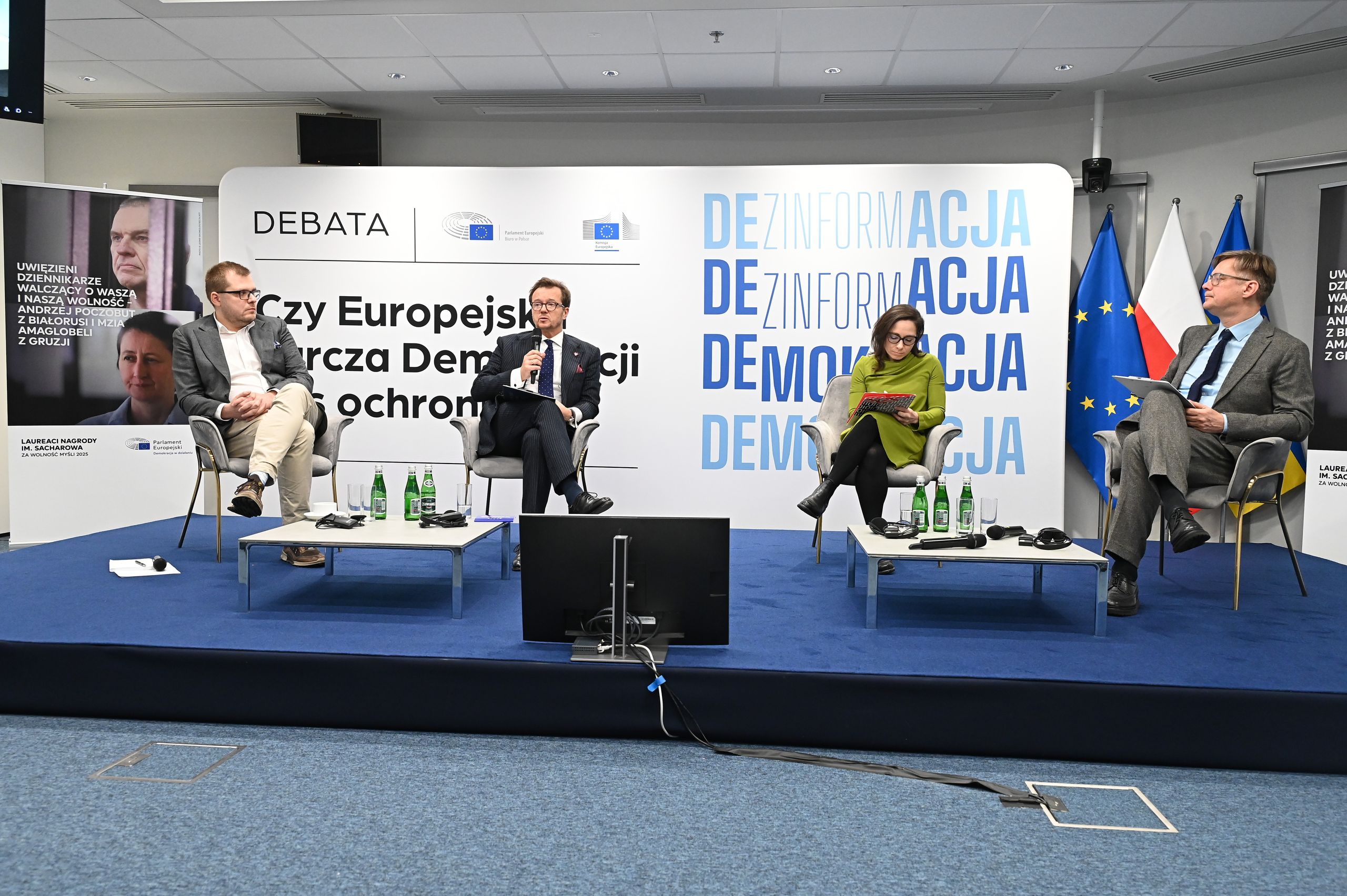 Photo: PAP/C. Piwowarski
Katarzyna Smyk of the European Commission pointed to a decline in trust in democracy caused by disinformation and the crisis of traditional media. MEP Michał Wawrykiewicz spoke about deliberate, manipulative narratives spread on social media and by populist politicians, aimed at weakening the Union. Threats also include cyberattacks and subversive actions by authoritarian states. EU legal acts—such as the DSA, the AI Act, and the new strategy, the European Democracy Shield—are intended to counter these risks. As part of the Shield, the Agora EU program will be created, with a €9 billion budget for civil society organizations that will support education and fact-checking.
Simona Constantin of the EC explained that the Shield consists of three pillars: protecting the information space, strengthening the media, and safeguarding electoral processes. The EU aims to limit the influence of manipulated content and reinforce independent media and information pluralism. It also intends to support young people and local democratic initiatives to strengthen society’s resilience to propaganda.
However, Katarzyna Szymielewicz of the Panoptykon Foundation argued that without effective enforcement of regulations toward digital giants, the Shield will not fulfill its role. She pointed to delays within the Commission and to platforms ignoring codes of good practice, while their algorithms continue to promote disinformation. She proposed granting researchers greater access to data and making real use of legal tools.
Piotr Trudnowski from the Jagiellonian Club emphasized that the main threat to Western democracies is the erosion of political legitimacy and the strengthening of a “bureaucratic oligarchy.” In his view, liberal elites have distanced themselves from democracy, fueling populism. He cited Romania as an example, where disinformation surrounding the elections exposed the limited effectiveness of EU instruments. He called for rebuilding trust in EU institutions.
Participants agreed that disinformation and the growing number of digital threats will continue to intensify, making a collective and practical response necessary. The planned European Democratic Resilience Center is expected to play a key role in this effort.
Source: PAP MediaRoom
