














On Tuesday, 18 November 2025, the Swedish company Saab Defence and Security announced that it had signed a trilateral Letter of Intent (LoI) with the American Boeing and the British BAE Systems regarding a joint offer of the T-7A Red Hawk advanced trainer aircraft to the Royal Air Force (RAF) as a successor to the BAE Systems Hawk Mk 128.
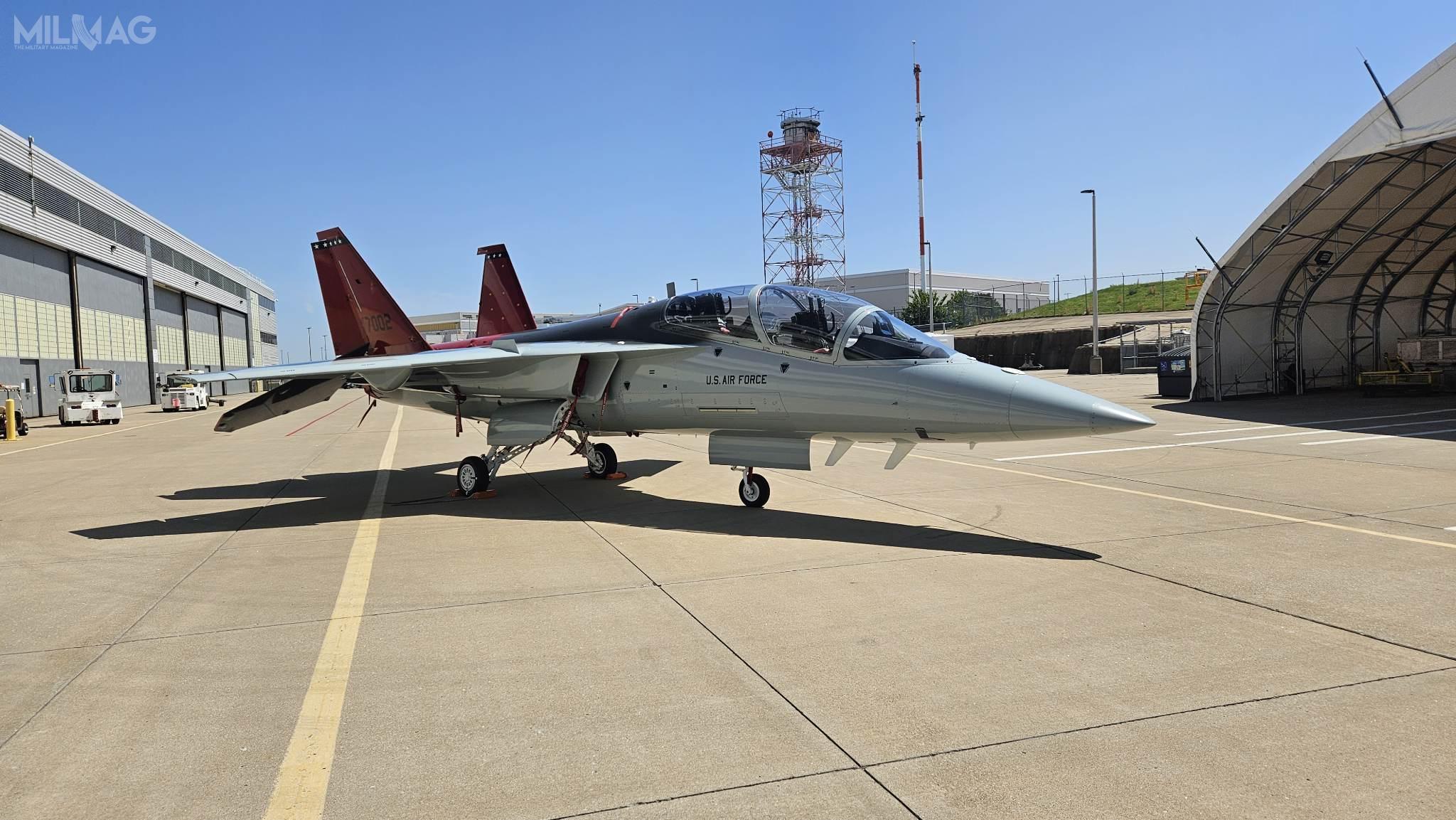 Photo: Jakub Link-Lenczowski, MILMAG
The signed document stipulates that the three parties will offer innovative training solutions that will best prepare RAF pilots for future international training capabilities.
“Together, Boeing with Saab and now BAE Systems will offer innovative training solutions to best prepare RAF pilots for the future, including advanced fourth-, fifth- and sixth-generation fighters,” said Bernd Peters, vice president of Boeing Defense, Space & Security’s Business Development & Strategy, referring to Eurofighter Typhoon FGR4, F-35 Lightning II, and GCAP aircraft. “This collaboration enhances the best of our technological capabilities, strengthens the transatlantic industrial base and offers opportunities for cooperative development.”
The requirements for the new British advanced jet trainer were defined in the 2025 Defence Strategic Review (SDR), published on 2 June of this year, which contains a total of 62 recommendations for the development of the UK Armed Forces under the government’s Plan for Change.
The offer for the RAF, which will include final assembly of the aircraft in the United Kingdom, will be led by BAE Systems, creating high-value jobs in the country. The companies will cooperate on a training system integrating live and synthetic training capabilities and related mission systems, as well as explore further opportunities to expand the UK aircraft supply chain.
“The strong partnership between Boeing and Saab developed the T-7 to be the world’s best solution for future pilot training. By working with BAE Systems, Saab believes the UK can gain a worthy successor to the Hawk that is the right choice for pilots for decades to come,” said Saab’s head of business area Aeronautics Lars Tossman.
Simon Barnes, Group Managing Director, BAE Systems’ Air sector, said:
“Our new collaboration with Boeing and Saab will enable us to present a compelling offer to the UK Royal Air Force and our global customers, leveraging the latest tech innovation in training systems and a world-class jet trainer aircraft. We’re committed to ensuring this solution offers the best overall outcome for the nation to support the UK’s combat air readiness and deliver economic benefit.”
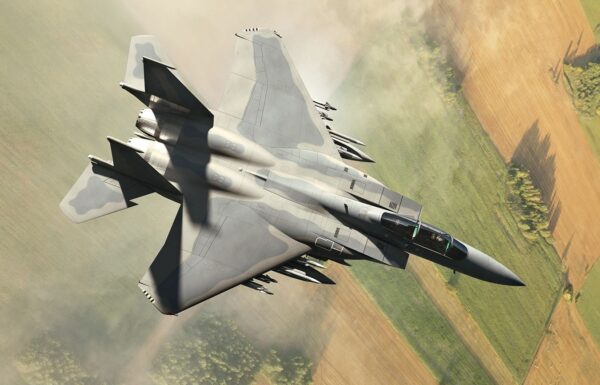
The T-7A Red Hawk was selected by the U.S. Air Force (USAF) in 2018 under the T-X (Trainer-X) program, valued at up to 9.2 billion USD, under which Saab and Boeing may deliver between 351 and as many as 475 aircraft as successors to roughly 500 Northrop T-38 Talons that have been in service since 1961.
The T-7A is 14.15 m long, has a wingspan of 10 m, and a height of 4 m. It is powered by a single GE Aviation F404-GE-402 afterburning turbofan engine providing 79 kN of thrust, enabling a maximum speed of 1300 km/h, a range of 1839 km, a climb rate of 170 m/s, and a service ceiling of 15,000 m.
Boeing and Saab intend to offer the Red Hawk to additional users, including the U.S. Navy under the Tactical Surrogate Aircraft program. Regarding exports, initial discussions involved Australia, Serbia, Sweden, and Brazil, currently, around 30 countries have expressed preliminary interest.
The United Kingdom plans to retire the Hawk Mk 128 around 2035, but the introduction of its successors is expected to begin after 2030. At present, 28 Hawk T2 aircraft are used for pilot training by No. IV Squadron and No. XXV (Fighter) Squadron, both part of No. 4 Flying Training School at RAF Valley. Additionally, the Red Arrows aerobatic team based at RAF Waddington operates 17 Hawk T1 aircraft.
Great news. A Letter of Intent to collaborate on the RAF fast jet programme has just been signed. https://t.co/f89vT38HTR
— Saab (@Saab) November 18, 2025
