
















What will replace the current pistol in Swiss holsters?
German-language media report that later this month the Swiss Armed Forces will choose a new standard semi-automatic pistol to replace the now-aged Model 75, introduced in 1975. The selection is expected to come down to one of three bidders – Glock, SIG Sauer, or Heckler & Koch.
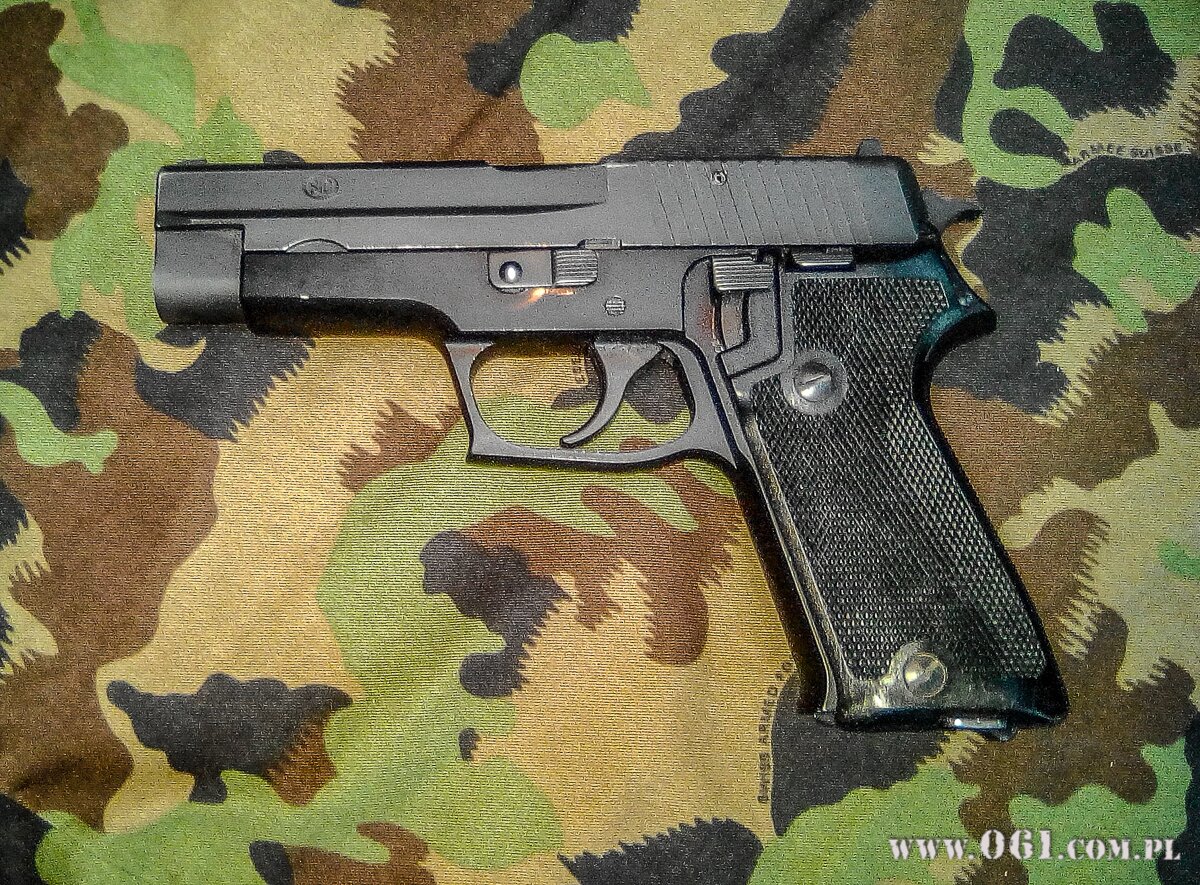
9 mm P75 / Photo: Kolekcja 61
The competition is now approaching its final stage. Although the media do not clearly specify the exact pistol models (nor whether new variants were developed specifically for Switzerland), it can be assumed that the candidates are the Glock G17, the Heckler & Koch SFP9, and the SIG Sauer P320. The latter is considered a certainty, as some sources report that the P320 did not fully pass the Swiss tests, yet still made it to the final stage of the competition as part of “fair competition.”
Analysis of the offers
Glock
The Glock G17 is the first striker-fired pistol with a polymer frame to enter the market. It is a model that has achieved significant success internationally. The currently produced fifth generation continues to hold a strong position despite the emergence of strong competition. One of Glock’s recent sales successes was the introduction of the Glock G17FR into the French Armed Forces in 2020.
Recently, however, Glock’s situation has become somewhat unclear. In the United States, the Austrian pistol has found itself caught between a rock and a hard place due to lawsuits filed by two states. According to them, Glock is placing on the American market pistols that are easily modified into fully automatic firearms. This concerns “full auto switches” – illegally produced and installed accessories that replace the slide’s backplate. This component interacts with the trigger bar, enabling continuous fire. These modifications are widely used and sought after by criminals, significantly increasing their firepower.
To address this issue, Glock has decided to introduce new models to the U.S. market, recognizable by an additional “V” in their designation (e.g., G17V). These will replace the currently produced commercial models. Whether this also applies to institutional clients is unknown at the moment. What distinguishes the V-line? At first glance, the pistols are almost identical to Gen5. Externally, differences can be seen in the slide’s backplate. However, these changes stem from modifications made inside the slide. Around the firing-pin channel, high ridges have been added to block access to the arm of a full auto switch. The firing pin itself has also been altered slightly—it is narrower than the “original.”
Was the modification effective? Yes and no. The changes to the firing-pin channel, intended to prevent illegal conversions, can be easily removed with a rotary tool, as the American Internet has already demonstrated.
What does all this mean for Glock? It is difficult to say definitively. The situation is still developing, and there is no clear answer as to whether these changes will be introduced into models intended for institutional clients or whether they will appear in Europe or on other markets at all. Gen5 Glocks remain proven designs which, despite growing competition, continue to dominate the market.
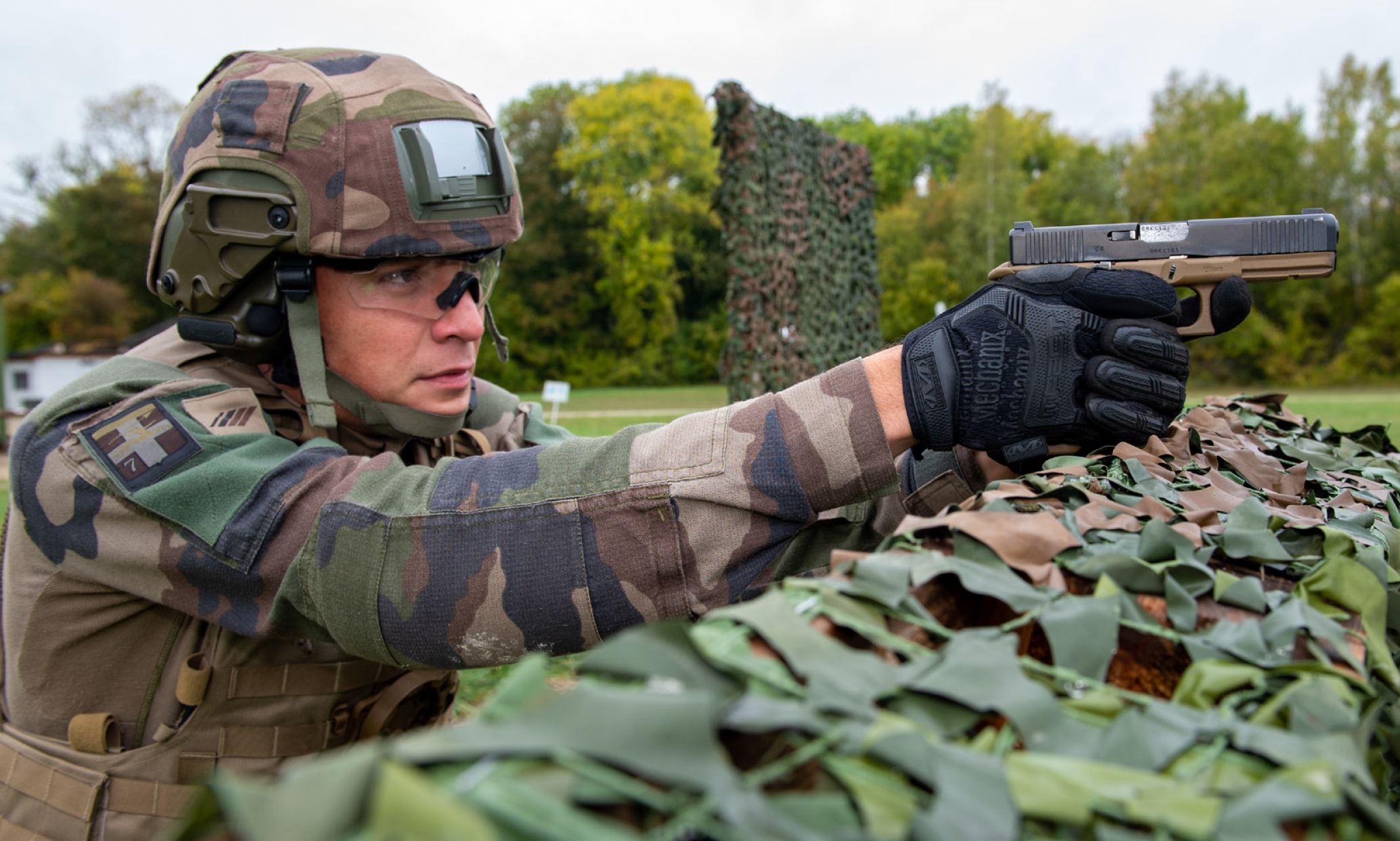
Glock 17FR
SIG Sauer P320
The P320 is SIG Sauer’s flagship pistol. This striker-fired handgun distinguished itself on the market with its FCU – Fire Control Unit – design. In the P320, key components of the trigger mechanism are housed in a removable chassis and separated from the polymer grip. This module carries the actual serial number and can be easily and quickly transferred between different grips, which not only simplifies parts replacement and servicing but also allows for extensive user-level customization. The polymer grip, which in the P320 is merely an accessory, is available in many versions – offered both by SIG Sauer and third-party manufacturers.
The P320, whose modified variants entered service with the U.S. Armed Forces under the designations M17 and M18, has received considerable media attention. Incidents involving unintentional discharges have been reported. However, SIG Sauer carried out a warranty replacement of trigger-mechanism components in the P320. Despite this, occasional reports of further incidents continued to appear – mostly in the United States, where the P320 enjoys its greatest popularity.
According to the Swiss consumer magazine Saldo, the P320 did not fully pass the tests conducted as part of the competition, yet it was still admitted to the final stage.
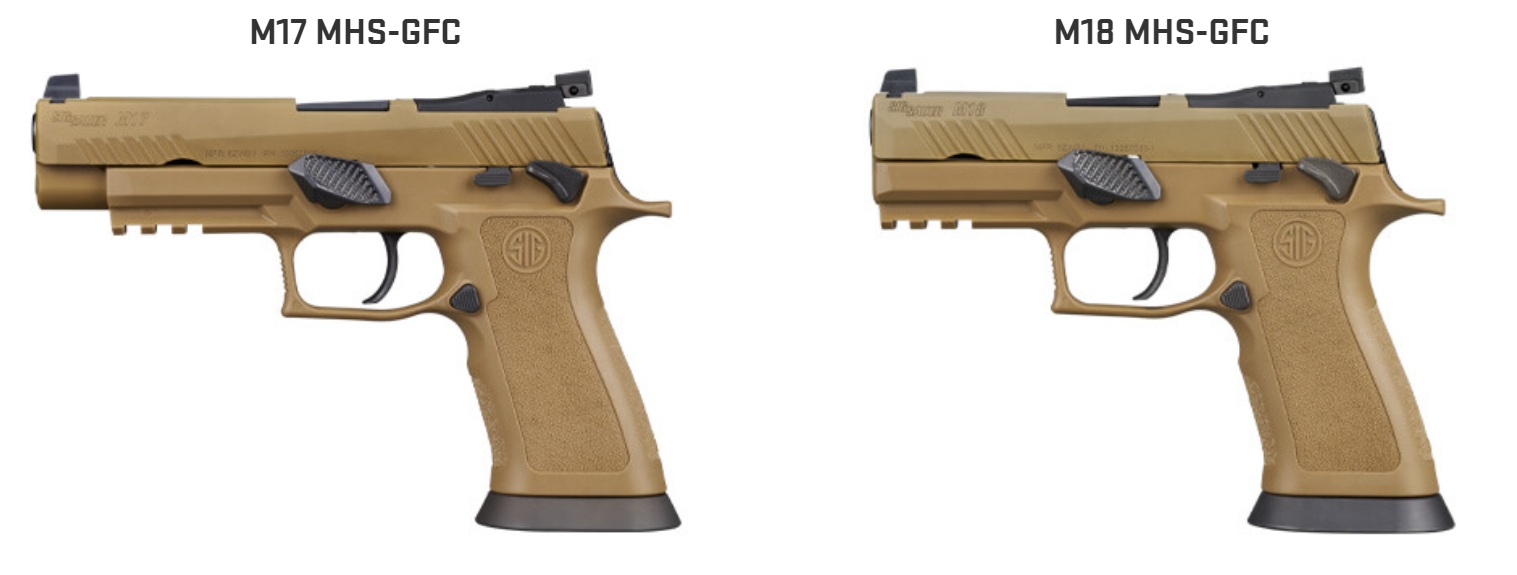
The latest approved configurations of the M17 and M18 pistols with accessory packages / Photo: SIG Sauer
Heckler & Koch
Heckler & Koch’s catalog includes both hammer-fired and striker-fired pistols. Since the other two competitors in the tender are offering striker-fired models, it can be assumed that Heckler & Koch is presenting the SFP9 to the Swiss.
The SFP9 debuted in 2015 as H&K’s answer to the striker-fired pistols of its competitors. In terms of design and user features, it clearly draws inspiration from the earlier P30, distinguishing itself through its characteristic slide geometry, an ergonomic frame with interchangeable backstraps and side panels, and high manufacturing quality.
The SFP9 has been successful on both the civilian and institutional markets. Its greatest achievement is arguably its selection, adapted for maritime operations, as the SFP9-M by the Japan Self-Defense Forces. Additionally, it has seen success in Lithuania (as the standard sidearm of the armed forces) and in Germany, where the SFP9 has been adopted by the Berlin police. It is widely regarded as a safe, high-quality firearm, though typically more expensive than the offerings of its competitors.

The SFP9 in the hands of a Japan Self-Defense Forces soldier
The 9 mm Model 75 pistol – a solid, though now historical, design
The 9 mm Model 75 pistol, manufactured by SIG Sauer, was created specifically at the request of the Swiss Armed Forces and became the precursor to the now-legendary P220 and P226 lines. The latter, featuring a double-stack magazine with a then-high capacity, belongs to the group of “wonder nines,” alongside designs such as the Browning Hi-Power, Beretta 92, and CZ 75. The P220 featured a hammer-fired double-action trigger mechanism equipped with an additional decocker. The Model 75 pistol replaced Switzerland’s previous standard sidearm, the Model 49—better known as the iconic P210.
Selected pistols from the P22x line remain in production to this day. They have also been copied and have served as design templates for other firearms. They continue to be sought-after and valued by shooters.
From a practical standpoint, however, the Model 75 is clearly outdated. It is fed by a single-stack box magazine whose capacity falls far short of modern standards. It also lacks an accessory rail on the frame, which would allow the mounting of lights or aiming devices. Additionally, it is equipped with a standard barrel with no threading for muzzle devices (primarily suppressors).
See also:
