























The improvements to be introduced in the second iteration of the Piorun will focus on two key areas. The first concerns the seeker head. A third channel operating in the ultraviolet spectrum will be added to the two existing infrared channels. This change will improve target-tracking effectiveness and increase resistance to infrared countermeasures (flares) used to confuse heat-seeking missile seekers (Belgium Approves Purchase of Piorun MANPADS).
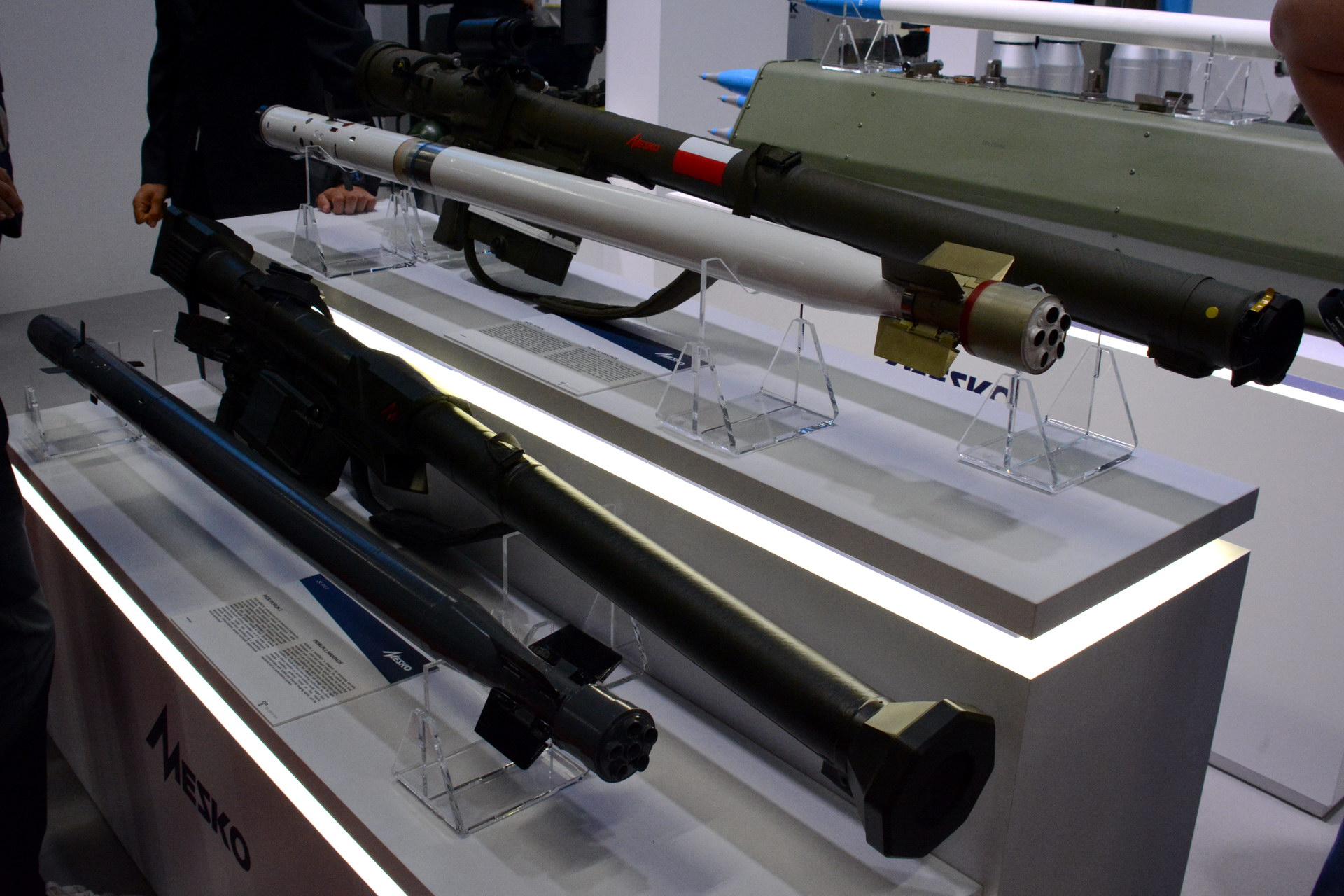 Photo: Przemysław Gurgurewicz, MILMAG
The second change concerns the control-actuation block. Instead of the currently used gas generators that drive the control fins, electric motors will be employed. This new solution is expected to make the missile’s flight path smoother. As a result, it should slightly increase flight speed and extend the range of the Piorun 2 compared to the current version. Work is also underway on a new fragmentation warhead featuring controlled fragmentation. Three variants are being tested: one with tungsten balls, one with rods, and one with bars. The most effective design will be submitted as the proposed warhead for Piorun 2. Other planned upgrades include improved ergonomics and a reduction in the overall weight of the system.
The principle is simple. At a preset altitude, the warhead breaks apart, generating fragments of predetermined size. “Thanks to this, we will be able to strike targets more effectively,” notes Zbigniew Drabik. “At the moment, Mesko is testing three variants. The one that proves most effective will be presented to the Armament Agency as the proposal for Piorun 2,” the director adds.
According to Drabik, Head of the Missile Division at Mesko S.A., if a contract with the Armament Agency for Piorun 2 deliveries is signed this year, the first sets should reach the end user in 2028.
