





















The Łukasiewicz Research Network – Industrial Research Institute for Automation and Measurements PIAP is one of the key partners in the European consortium carrying out the iMUGS2 project, whose aim is to develop a new generation of interoperable unmanned ground systems. Selected by the European Commission for funding under the European Defence Fund (EDF), the project brings together 29 partners from 15 EU Member States.
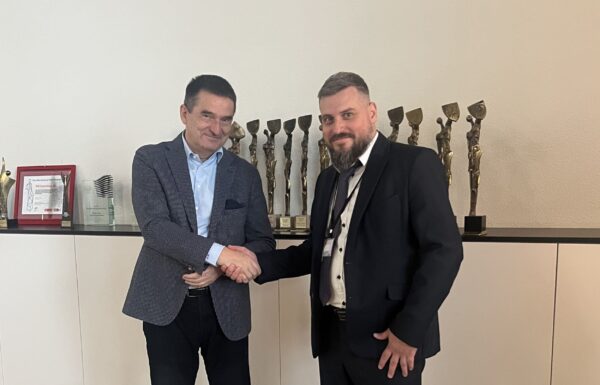
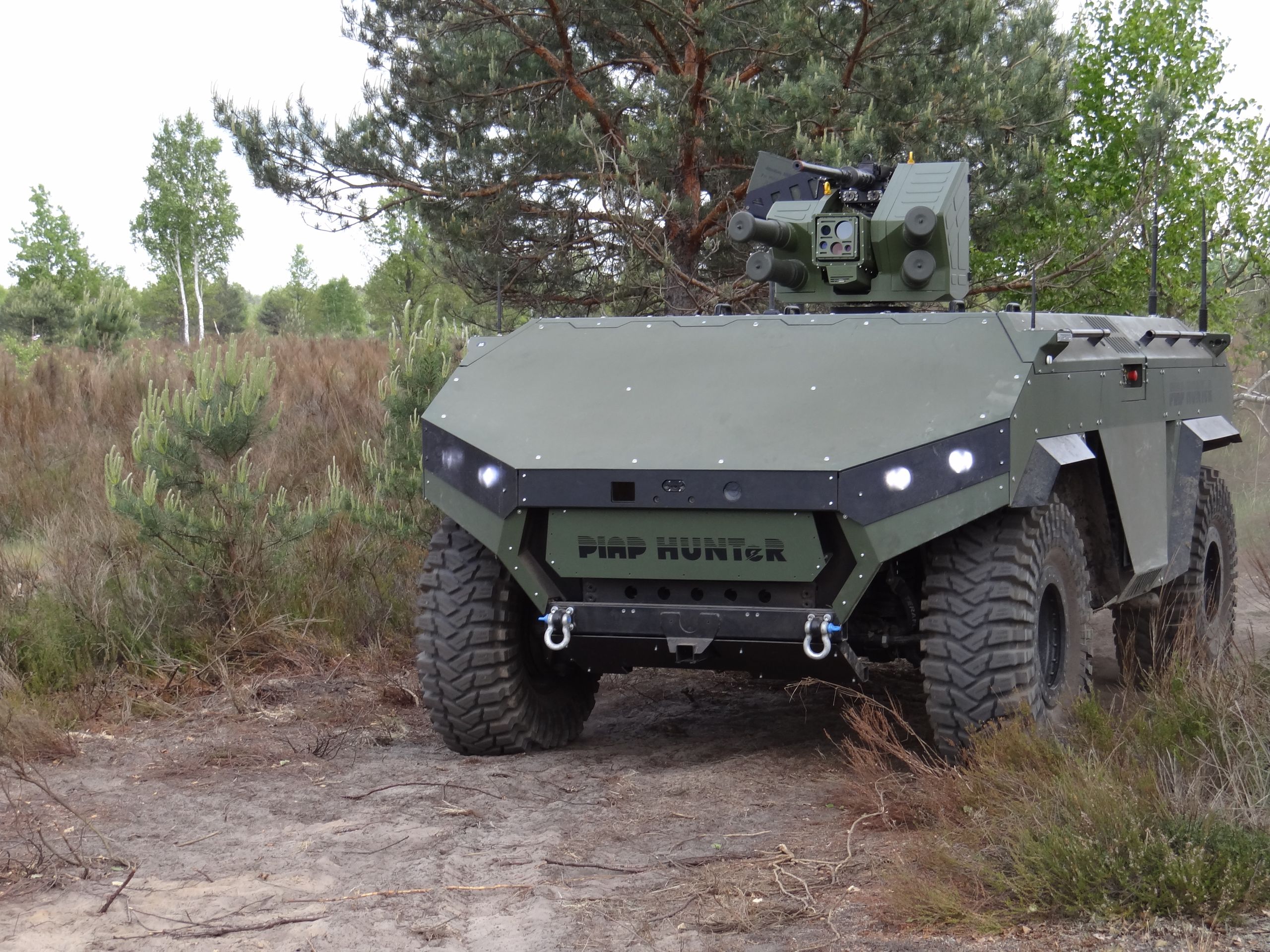 Photo: Łukasiewicz – PIAP
The iMUGS2 project builds on the results of the first edition of iMUGS and focuses on strengthening European capabilities in robotics, autonomy and advanced systems integration. Its goal is to develop a scalable, cyber-secure and interoperable system-of-systems architecture that includes both unmanned and manned platforms. The project directly contributes to enhancing European technological sovereignty in AI-based autonomous functions, communications, command and control (C2), as well as multi-domain integration.
Strategic importance for Europe’s defense
iMUGS2 is of strategic importance for Europe’s security. It responds to the growing needs of EU Member States for modern, resilient and cooperative unmanned systems. In the context of a dynamic geopolitical situation and increasing pressure on defense capabilities, the project supports the development of common European standards for unmanned ground systems, improving the interoperability of armed forces, enabling more effective cooperation in international missions, and accelerating the deployment of next-generation technologies on the battlefield.
Through iMUGS2, Europe is strengthening its position in the field of autonomous defense systems, developing technologies that may form the basis of future integrated unmanned formations.
“Collaboration with partners from across Europe is crucial for Łukasiewicz – PIAP in developing our technologies and competencies. Projects such as iMUGS2 enable us to combine experience, establish common standards and deliver solutions that significantly enhance the security and innovation of European defense systems,” said Dr. Eng. habil. Piotr Szynkarczyk, Director of Łukasiewicz – PIAP.
The iMUGS2 project also aligns with the strategic priorities of the entire Łukasiewicz Research Network, particularly in the area of Defense and Security.
“Our new strategy focuses resources on key areas where we have strong expertise. Cooperation between the institutes of the Network and industry, especially in defense projects, is the foundation for building technological sovereignty and ensuring the real implementation of innovation,” added Dr. Hubert Cichocki, President of the Łukasiewicz Research Network.
Key contribution of Łukasiewicz – PIAP
As part of the iMUGS2 project, the Łukasiewicz – PIAP Institute is responsible for a number of key tasks enabling operational interoperability and the development of capabilities for unmanned ground systems:
- Integration of the autonomous PIAP HUNTeR platform with the European system-of-systems architecture
-
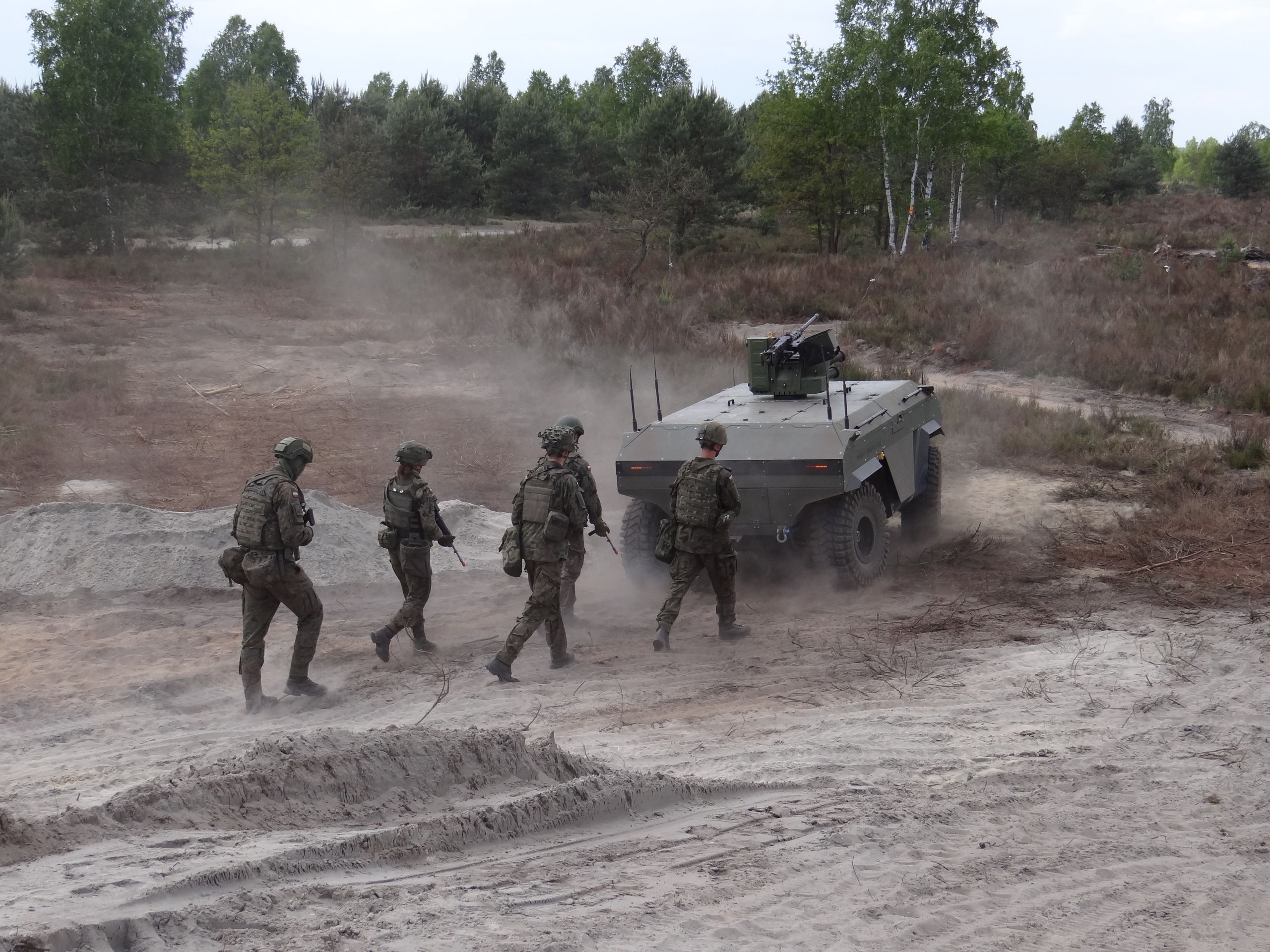
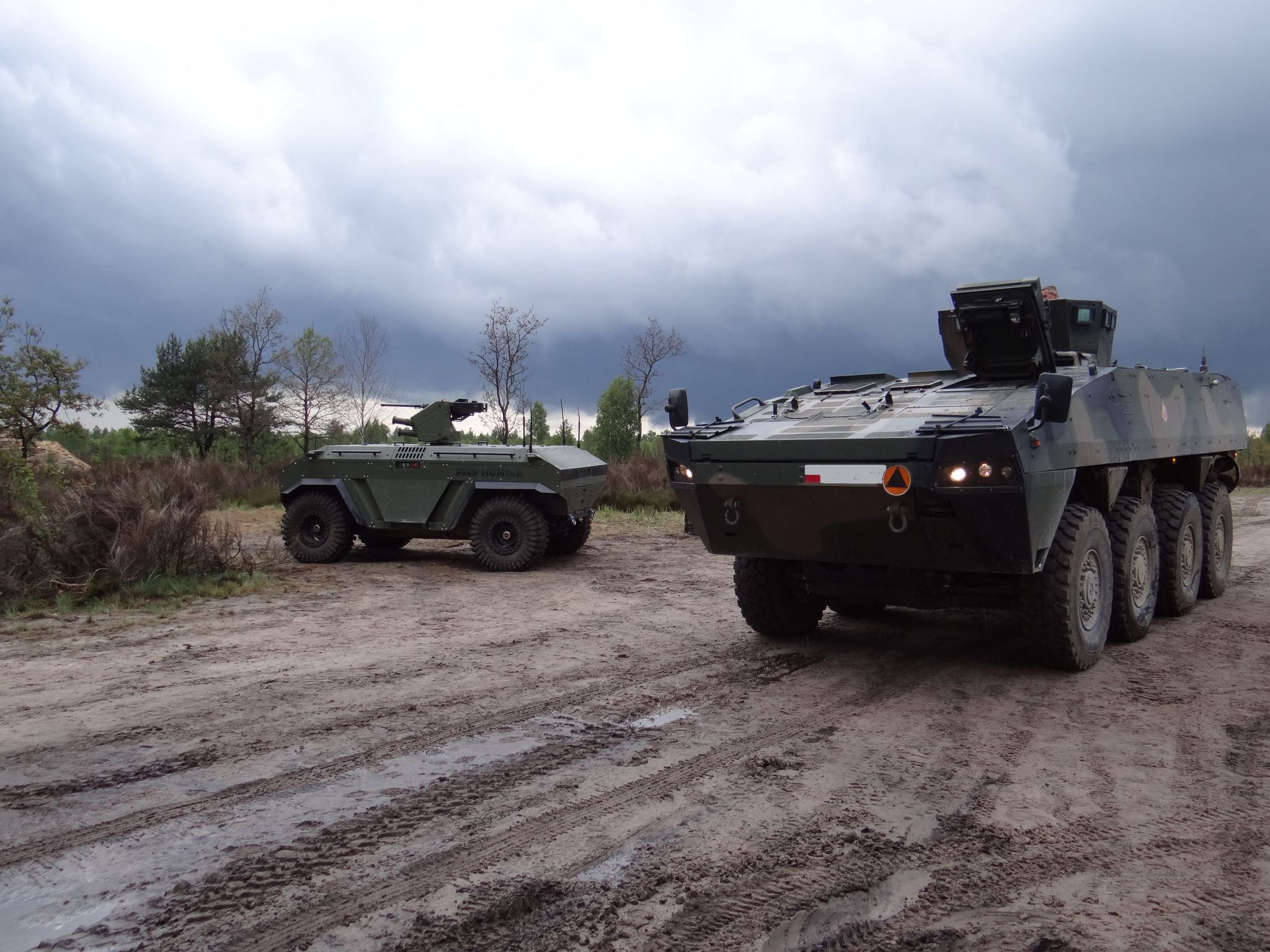
- The Institute provides the PIAP HUNTeR combat mobile robot, which will be integrated as a fully-fledged component of the iMUGS2 architecture. This will enable practical testing and refinement of common operational standards within a multinational robotic ecosystem. The platform will serve as a reference implementation of European interoperability requirements in autonomous missions and infantry support scenarios.
2. Integration of the PIAP HUNTeR with a weapons module and the autonomy system developed under iMUGS2
-
- Łukasiewicz – PIAP is working on the integration of sensors, control systems, mission-planning functions and autonomous algorithms, combining the HUNTeR platform with weapons modules and autonomy solutions developed within the consortium. This task is crucial for demonstrating cooperation among unmanned platforms in operational and multidomain environments.
3. Ensuring modularity, interoperability and compliance with EU and NATO standards
-
- The Institute co-develops the iMUGS2 architecture to ensure compliance with European and NATO interoperability requirements. Particular emphasis is placed on alignment with the emerging NATO STANAG 4817 standard, which defines cooperation and tasking of unmanned ground and aerial systems in multidomain operations. These efforts are essential for ensuring modularity, technical openness, and future integration of manned and unmanned platforms of European armed forces.
Project scope and development path
iMUGS2 encompasses parallel conceptual, operational and technological activities – from system architecture design, through the development of autonomy and communication functions, to integration and preparation of technology demonstrators. The project also includes electronic resilience, communication security and efficiency in life-cycle management.
Project value
With a total budget of approx. 55 million EUR – of which nearly 50 million EUR comes from the EDF – the iMUGS2 project focuses on three strategic areas:
- development and demonstration of unmanned ground systems supporting infantry operations,
- creation of operational concepts for land and aerial unmanned systems to enhance the effectiveness of infantry battalions and multidomain cooperation,
- development of open system architectures and life-cycle management frameworks ensuring interoperability with current and future platforms.
The iMUGS2 consortium
The consortium consists of 29 partners representing the defence industry, SMEs and research organisations. This diversity of expertise enables a comprehensive approach to strengthening European capabilities in military robotics and autonomy.
Consortium members: AVL List, Bittium Wireless, Bureau Veritas, Czech Technical University in Prague, Cybernetica, Delft Dynamics, Diehl Defence, dotOcean, Elettronica, Escribano Mechanical & Engineering, FN Herstal, GMV, Huta Stalowa Wola, Insta Advance, Integrated Systems Development, John Cockerill Defense, Kepla, KNDS France, KNDS Deutschland, Kongsberg Defence & Aerospace, Latvijas Mobilais Telefons, Łukasiewicz – PIAP, Milrem Robotics (project coordinator), Nortal (Talgen Cybersecurity), Norwegian Defence Research Establishment, Royal Military Academy of Belgium, Safran Electronics & Defense, Svensk Konstruktionstjänst and TNO.
Press release
See also:
