


























Over the past decade, the Polish shipbuilding industry has lived in a state of mild cognitive dissonance. On the one hand, it finally began producing something it could genuinely be proud of. On the other, for years there were recurring reports suggesting that exports might be just around the corner. In the case of the Kormoran II, our new-generation mine hunting vessels, this narrative sounds particularly familiar. First came the euphoria, which I myself shared, followed by cautious optimism, and finally somewhat forced assurances from politicians that global interest was high.
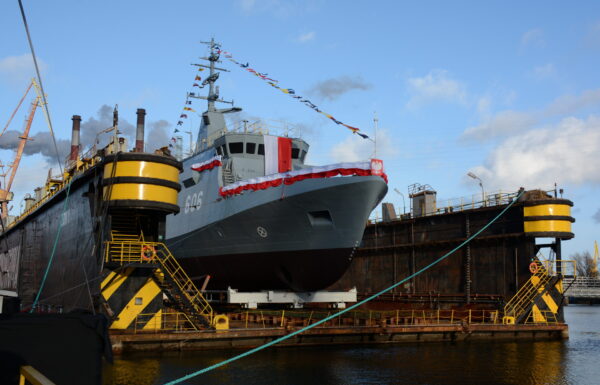
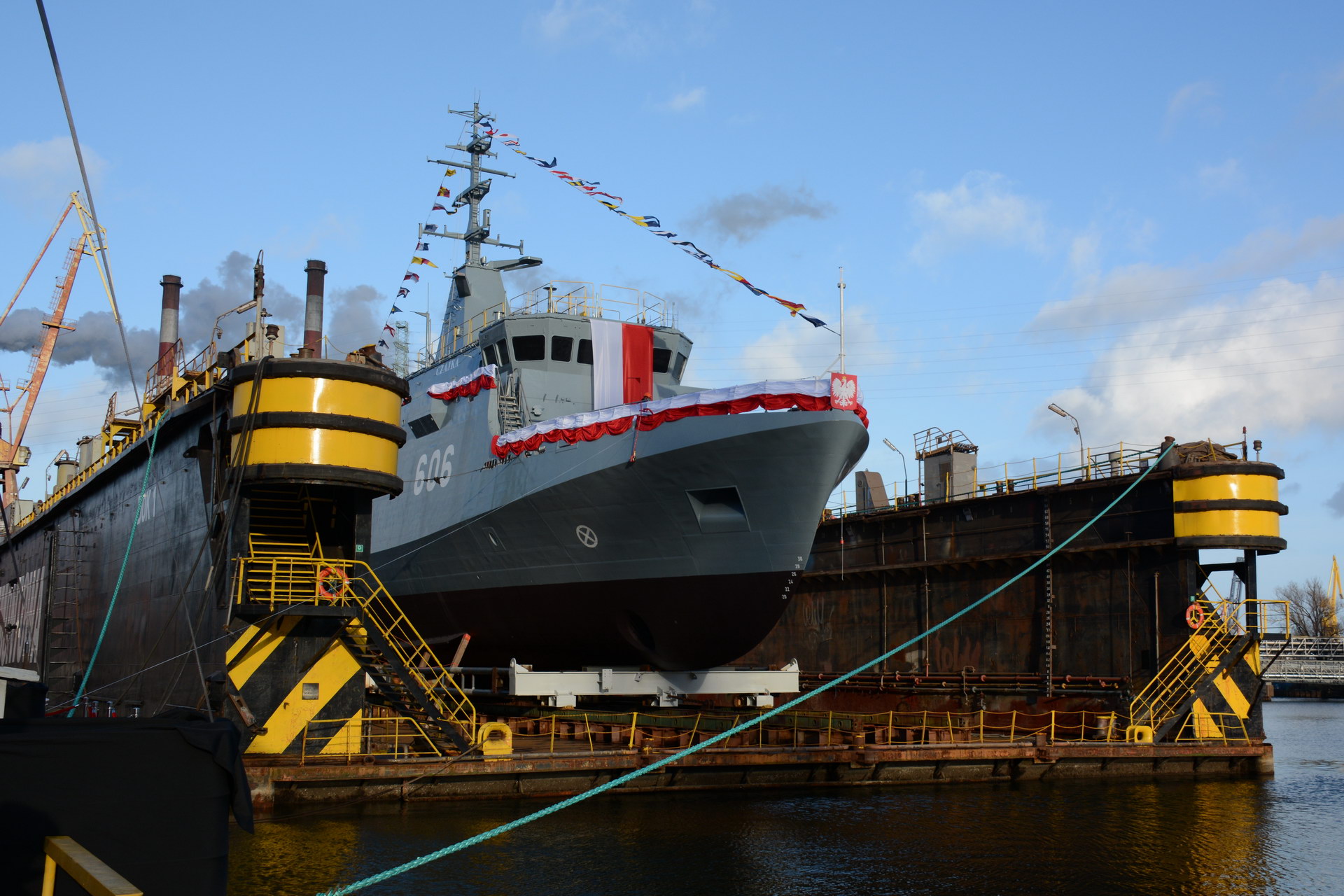 ORP Czajka – the last of six ordered Kormoran-class vessels / Photo: Przemysław Gurgurewicz, MILMAG
There is no doubt that the ship is a successful design, especially in light of the experience gained from building and operating the prototype. It is a platform that can confidently be placed alongside the best in the world, without the need for patriotic fanfare. The Kormoran II was developed based on a sound mine countermeasures philosophy, makes use of modern sensors and combat systems, and is backed by the experienced consortium of Remontowa Shipbuilding, PGZ Stocznia Wojenna, and OBR CTM. It is a true 21st-century product. The problem is that a good product does not sell itself, especially when it comes from a country that does not enjoy the same naval shipbuilding brand recognition as the Netherlands, France, or even Turkey.
Over the ten years since the launch of the prototype ORP Kormoran, several approaches were attempted. First came a soft form of diplomatic and marketing pressure aimed at our Baltic neighbors, for whom such vessels could have been a natural choice. Later, more or less official signals appeared suggesting interest from NATO countries and even Gulf states, which sounded impressive but were difficult to verify. In the meantime, Poland had to continue ordering additional units for its own navy.
A Chance in the Future?
In practice, the most serious attempt to enter the foreign market did not come until 2025, when PGZ, Remontowa Shipbuilding, and OBR CTM signed a formal agreement on the joint promotion and sale of the Kormoran-class vessels. Before that, there had been plenty of talks, declarations, trade-show trips, and presentations, but what was missing was a ready, coherent offer that could be presented to a potential customer as a complete product – complete with a training package, technical support, and a clear division of responsibilities. And, above all, diplomatic backing. Only from that point on can one speak of a genuine attempt to bring Polish mine countermeasures vessels onto the global market.
Is it too late? Not necessarily. Mine countermeasures forces worldwide are currently undergoing a transformation. The war in Ukraine and the related operations in the Black Sea have demonstrated how rapidly the importance of unmanned systems is growing and how easily maritime transport can be disrupted even by relatively primitive means. The Kormoran II fits this reality extremely well, as it is a platform designed from the outset to integrate new technologies – especially maritime unmanned systems. This is a major advantage over competitors that, in many cases, are modernizing designs rooted in the 1990s, with ships now being built that will remain incapable of operating at this level for many years to come.
The problem lies elsewhere. To sell a warship, it is not enough to have a good shipyard; political determination, diplomatic support, and the ability to provide financing to the customer are also essential. Poland has so far struggled in this regard. The Kormoran-class vessels could have been appearing in the catalogs of serious buyers for several years now, but instead of a consistent export push, there was a fragmented domestic procurement policy and a lack of a clear vision for the shipbuilding industry.
That does not mean the case is lost. The Kormoran is more mature today than ever before, and the consortium finally has a complete set of arguments for foreign customers. If Polish shipyards want to return to the map of significant exporters, they must start where their competitors are weakest. For ten years we have been hearing that there is “interest.” Perhaps the time has come for that interest to be replaced by the first contract. And if that contract were to come from a Baltic state – one that knows the environment well and understands that mines in the Baltic Sea are no joke – it would be the best possible scenario.
With the Kormoran, as with many Polish military projects, we have proven that we can deliver. Now we must prove that we can sell. And that challenge will be the most important test for Poland’s mine countermeasures vessels in the years ahead.
See also:
- Poland: Christening and Launch of Czajka – the Sixth Project 258 Mine Countermeasure Vessel
- Christening and Launch of Rybitwa – the Fifth Project 258 Minehunter for the Polish Navy
- The Keel Laying of Czajka – the Final Kormoran II-Class Minehunter
- Christening and launching of Jaskółka – the fourth minehunter of project 258
