























On Wednesday, August 20, 2025, U.S. company Lockheed Martin announced that its subsidiary, Sikorsky Aircraft Corporation, had received an initial 43 million USD order from the U.S. Army for engineering work to upgrade UH-60 Black Hawk multirole helicopters for integration with various types of unmanned aerial vehicles.
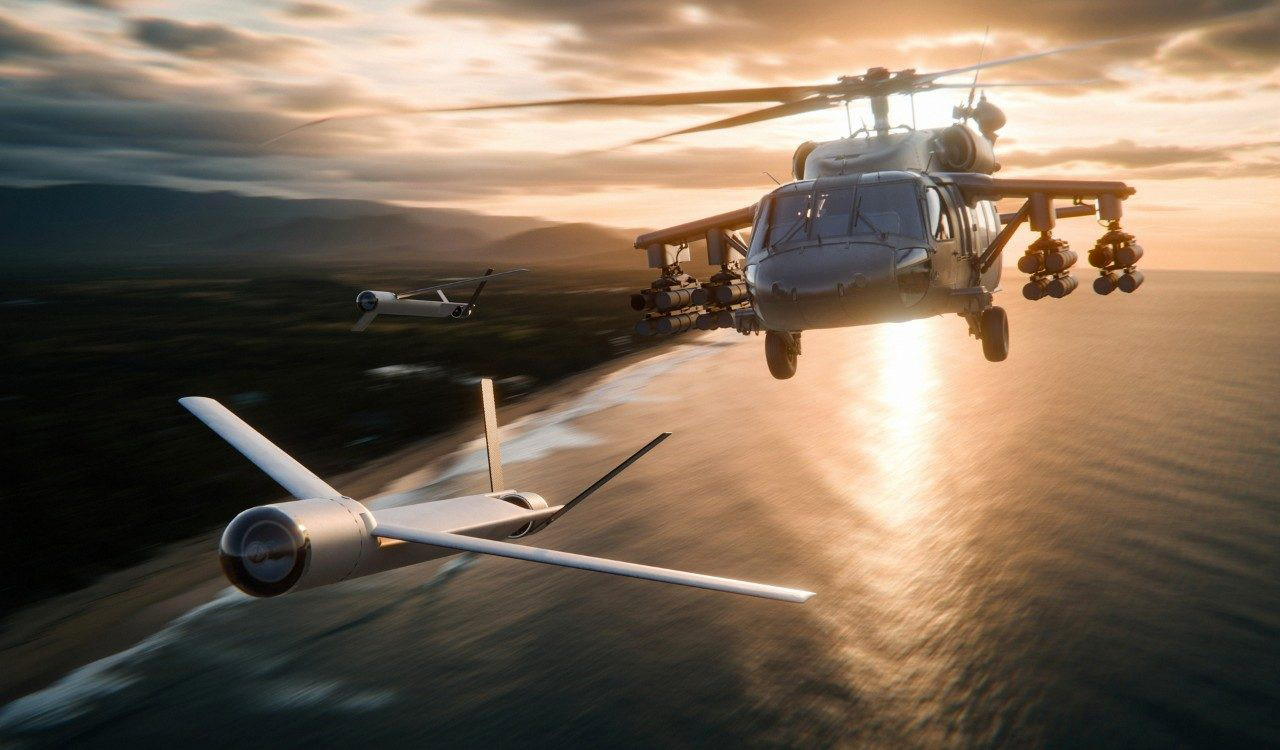 Image: Lockheed Martin
In this phase of modernization, the work will involve upgrading the helicopter airframe and integrating a new digital backbone architecture, necessary for the future integration of uncrewed systems under urgent operational needs. The contract also includes developing requirements and architecture using Model-Based Systems Engineering (MBSE).
“Sikorsky is ready to implement new technologies that will strengthen the combat-proven Black Hawk helicopter and give U.S. Army soldiers greater advantage in areas like the Indo-Pacific,” said Hamid Salim, vice president, Army and Air Force Systems at Sikorsky. “Integrating launched effects into the Black Hawk will enhance its capabilities and provide a significant advantage. Modernization is reducing costs, increasing efficiency and improving the overall maintenance and sustainment for the aircraft.”
The contract will support the U.S. Army’s short-term priority of integrating Air-Launched Effects (ALE) launch systems with the Black Hawk, enabling the use of unmanned aerial vehicles and other systems, thereby enhancing its combat mission capabilities. Lockheed Martin has been demonstrating missile-launch capabilities from the Black Hawk for years and is working with the U.S. Army to integrate them by 2026.
Collaboration within MBSE and digital engineering will focus on developing a digital UAV launch system, enabling joint and efficient design, testing, and operation. The digital backbone of this architecture, supporting the Modular Open Systems Approach (MOSA), will encompass the development of advanced systems and software to support the modernization of helicopters. This digital backbone will facilitate the rapid deployment of capabilities to respond to the platform’s future mission needs quickly.
These initial upgrades to the airframe, power systems, and digital backbone will create a solid foundation for further Black Hawk capability enhancements. With the more powerful General Electric T901-GE-900 turboshaft engine, improved airframe, and power systems, the helicopter will be able to carry heavier loads over greater distances. Future flight control system upgrades will incorporate autonomy and machine learning (artificial intelligence) features to assist pilots in demanding conditions, increasing safety and operational effectiveness.
“Together with our team of hundreds of American suppliers, we are committed to delivering the most advanced and capable modernized Black Hawk to the U.S. Army,” Salim said. “We look forward to continuing our work with the Army to ensure that the Black Hawk remains a vital component of our nation’s defense capabilities for years to come.”
Sikorsky is already implementing technology today that will enhance the capabilities of the modernized Black Hawk. For example, Sikorsky manufactures and delivers Upturned Exhaust Systems II kits. These kits provide significant improvements in infrared signature reduction for the current fleet and future upgraded helicopters, including weight reduction, increased reliability, and enhanced ease of operation.
It should be noted that in May 2018, the U.S. Army announced tests of an ALTIUS (Air-Launched, Tube-Integrated Unmanned System) unmanned aerial vehicle launched from a Black Hawk helicopter. These were carried out in September 2019. Later, in August 2020, under the ALE program, 10 companies were tasked with developing UAV integration technologies for FARA armed reconnaissance helicopters (later canceled) and tiltrotor aircraft under the FLRAA program, now known as the MV-75, which in the future will gradually replace the UH-60M/V in the U.S. Army
We’re implementing new technologies that will strengthen the combat-proven Black Hawk helicopter and give U.S. Army soldiers greater advantage in areas like the Indo-Pacific.
Learn more about future Black Hawk upgrades 👇
— Sikorsky (@Sikorsky) August 20, 2025
