




























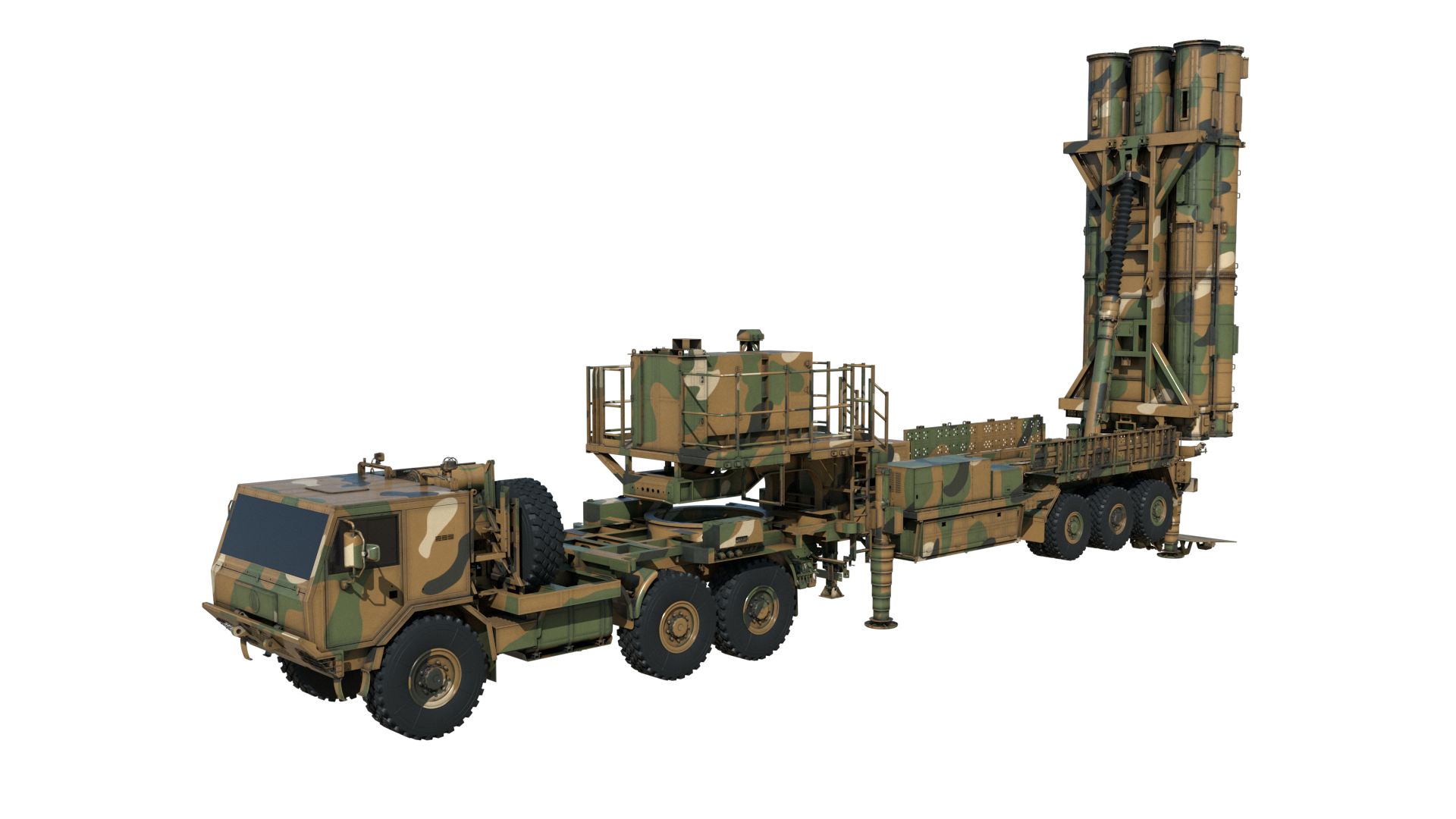
On Friday, November 28, 2025, South Korea’s Hanwha Aerospace announced that it had received a contract worth 705 billion KRW / 482.22 million USD from the Defense Acquisition Program Administration (DAPA) under the Ministry of National Defense of the Republic of Korea to begin serial production of the country’s first indigenous missile defense system, known as L-SAM (Long-range Surface-to-Air Missile).
 Images: Hanwha Aerospace
It will be a key element of South Korea’s multi-layered Korea Air and Missile Defense (KAMD) system, complementing the MIM-104 Patriot batteries and the indigenous KM-SAM II (Cheolmae-2). Under this contract, Hanwha Aerospace will carry out serial production and deliveries of L-SAM launchers and ballistic-missile interceptors between 2028 and 2030.
Development of the system was completed on November 29, 2024. The system is expected to intercept ballistic missiles (such as the KN-23/24) in the midcourse and terminal phases at altitudes of up to 40 km and at distances of 50–60 km. L-SAM demonstrated its ballistic-interception capability by successfully completing three out of four operational tests conducted between November 2022 and June 2023. The testing phase concluded in May 2024.
L-SAM will employ two types of interceptor missiles: a cheaper one for air-defense missions, intended to counter general aerodynamic threats such as aircraft or cruise missiles, and a more advanced interceptor for ballistic-missile defense. The anti-ballistic missile consists of three stages and a kinetic (hit-to-kill) kill vehicle equipped with infrared sensors and a precision flight-control system.
“This contract represents an important milestone in the development of South Korea’s air and missile defense,” a Hanwha Aerospace spokesperson said. “Through stable, large-scale production of L-SAM systems, we will help strengthen the security of the Republic of Korea. At the same time, the technologies and experience gained through this program will support deeper, more valuable defense cooperation with global partner nations.”
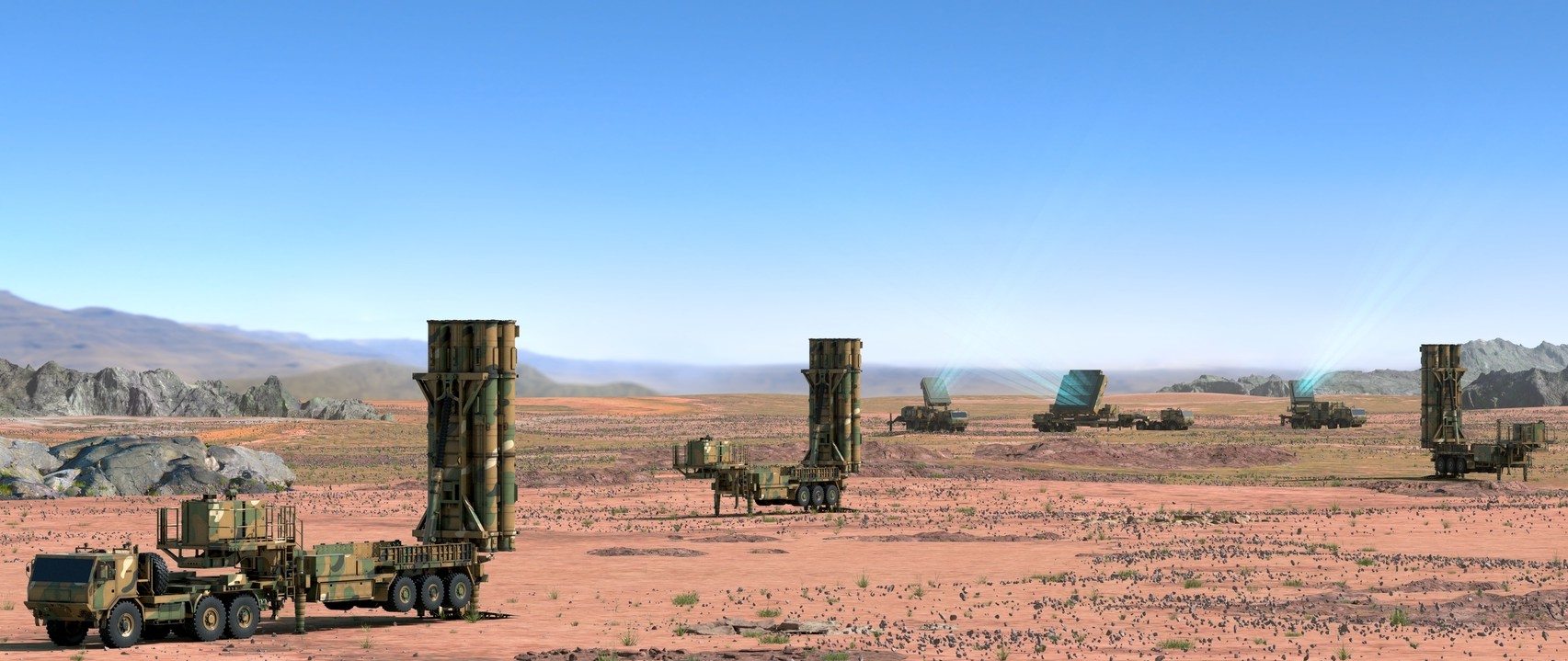
This agreement follows a production contract signed last month, valued at 357.3 billion KRW / 244.29 million USD, between DAPA and Hanwha Systems (a subsidiary of Hanwha Aerospace) for the prototype L-SAM MFR (Multi-Function Radar). Serving as the eyes and primary sensor of the L-SAM system, the MFR will detect and track incoming ballistic missiles and hostile aircraft at long ranges.
The L-SAM MFR is an S-band radar with an active electronically scanned array (AESA) antenna. A full L-SAM battery will also include a command-and-control (C2) center, a battle management station, and four truck-mounted launchers, each equipped with six interceptor missiles.
Meanwhile, on April 25, 2023, at the 153rd meeting of the Defense Acquisition Program Promotion Committee (DAPPC) under DAPA, a plan was approved to develop an improved L-SAM Block 2 system with a budget of 2.71 trillion KRW through 2027. It is intended to intercept not only ballistic targets but also hypersonic threats at altitudes of up to 180 km, making it the South Korean equivalent of the U.S. THAAD system, hence its informal nickname ‘K-THAAD’ (Korean THAAD).
On May 6 of this year, the aforementioned Hanwha Systems received a contract worth 54.7 billion KRW to build and produce the prototype L-SAM-II MFR multi-function radar for the L-SAM Block 2 program.
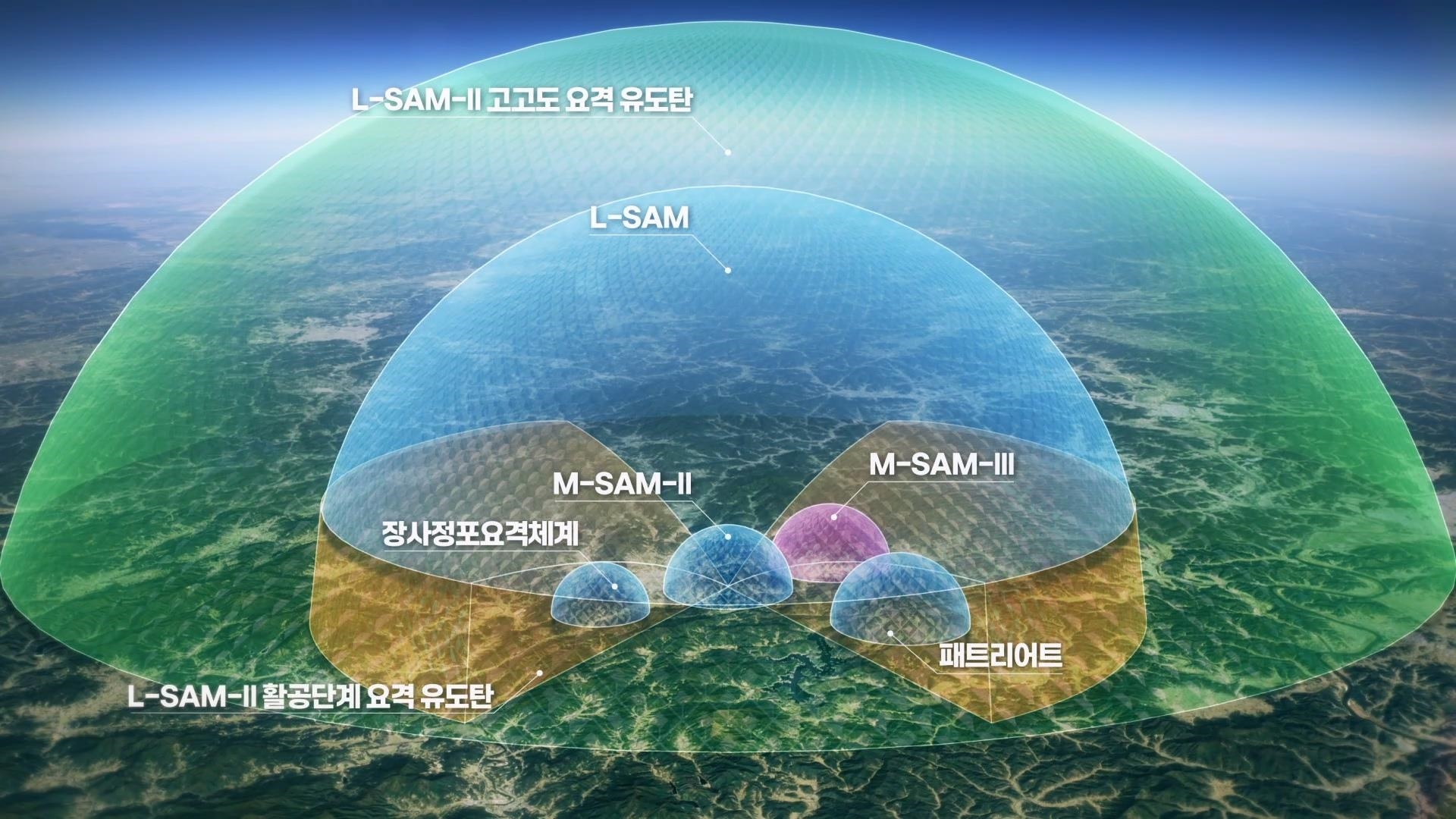 KAMD (Korea Air and Missile Defense) Structure
Earlier, on April 30 of this year, Hanwha Systems received a contract worth 131.5 billion KRW to build and produce a prototype of the LAMD (Low Altitude Missile Defense) MFR multi-function radar, with delivery scheduled for November 2028. The radar has been designated as the sensor for a system equivalent to Israel’s Iron Dome missile-defense system.
On June 23 of this year, Hanwha Systems also announced that it had signed a Memorandum of Understanding earlier in the year with the U.S. company Northrop Grumman to cooperate on next-generation technologies for Integrated Air and Missile Defense (IAMD).
