

















On Tuesday, August 12, 2025, the U.S. Navy’s Naval Sea Systems Command (NAVSEA), on behalf of the U.S. Department of Defense, signed a framework agreement worth 258,742,330 USD with Raytheon (part of RTX Corporation) for work related to the production of RIM-66 Standard Missile 2 (SM-2) Block IIICU interceptor missiles, intended, among others, for the future Canadian River-class destroyers under the Canadian Surface Combatant (CSC) program.
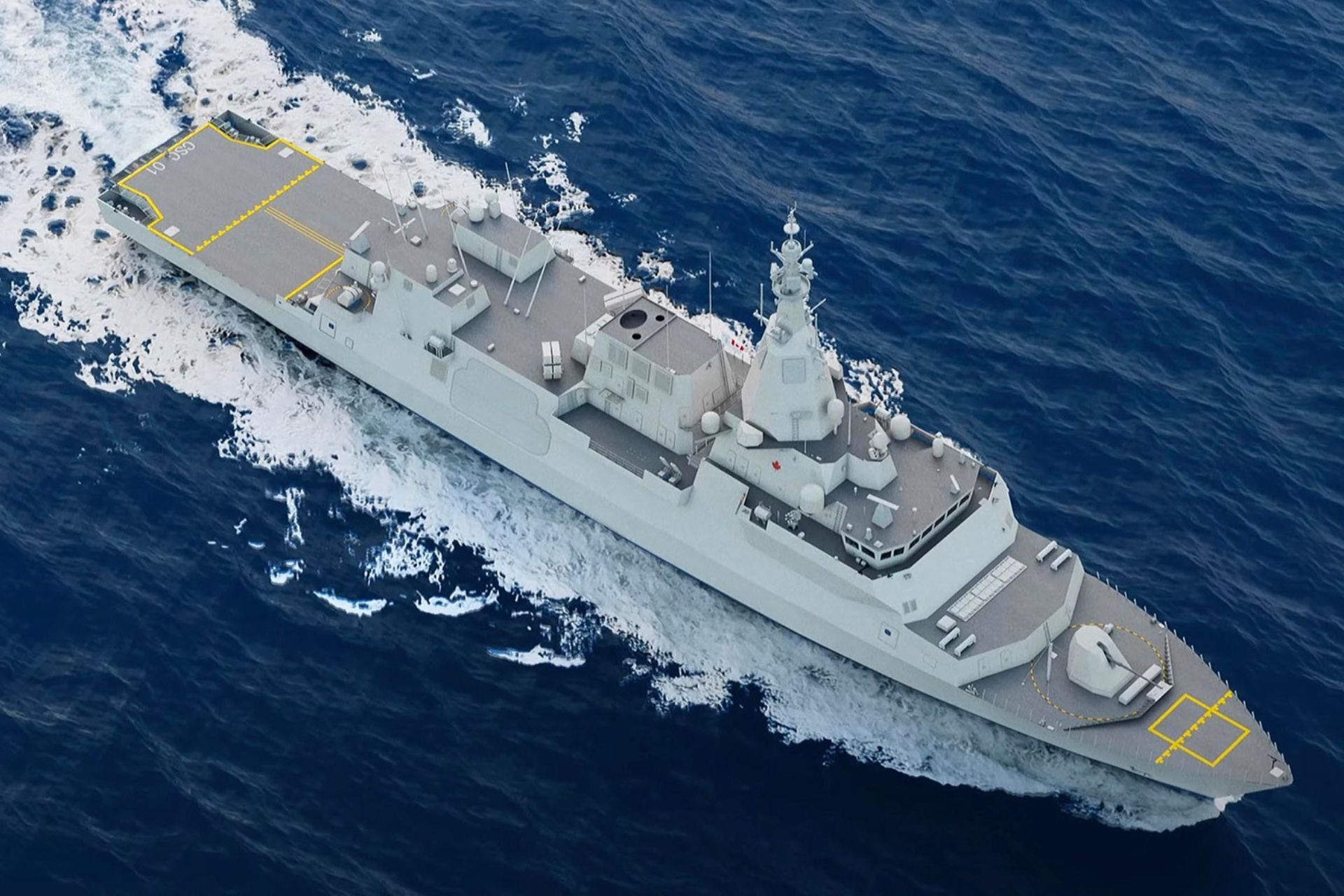 Rendering of a River-class destroyer / Graphic: Royal Canadian Navy
The base contract includes an optional extension to 263,137,090 USD. The work will be carried out in Tucson, Arizona (72%); Simsbury, Connecticut (7%); Wolverhampton, United Kingdom (3%); Salt Lake City, Utah (3%); North Logan, Utah (1%); McKinney, Texas (1%); Warrington, Pennsylvania (1%); Bristol, Pennsylvania (1%); Hauppauge, New York (1%); Coxsackie, New York (1%); Tampa, Florida (1%); San Jose, California (1%); Anniston, Alabama (1%); and various other locations, each accounting for less than 1% (6%). Completion is planned for September 2031.
The initial funds come from the FY2025 NDAA defense budget, including 52,054,849 USD (65%) from U.S. Navy research, development, testing, and evaluation funds; 18,473,766 USD (23%) from the Foreign Military Sales (FMS) program for Canada; and 9,071,456 USD (11%) from reallocated FY2024 NDAA U.S. Navy research, development, testing, and evaluation funds. The latter will expire at the end of the current fiscal year (by September 30, 2025).
It should be recalled that on April 25, 2024, Raytheon received 344 million USD from the U.S. Department of Defense to develop, under the FMS program, new variants of the Standard Missile interceptor family: SM-2 Block IIICU and SM-6 Block IU.
Both new variants of the SM-2 and SM-6 missiles will be based on a common guidance section, which contains the electronics and software that guide the missile to its target. The updated interceptor missile variants will feature a newly designed common guidance section, a target detection system, an independent flight termination system, and an electronic module.
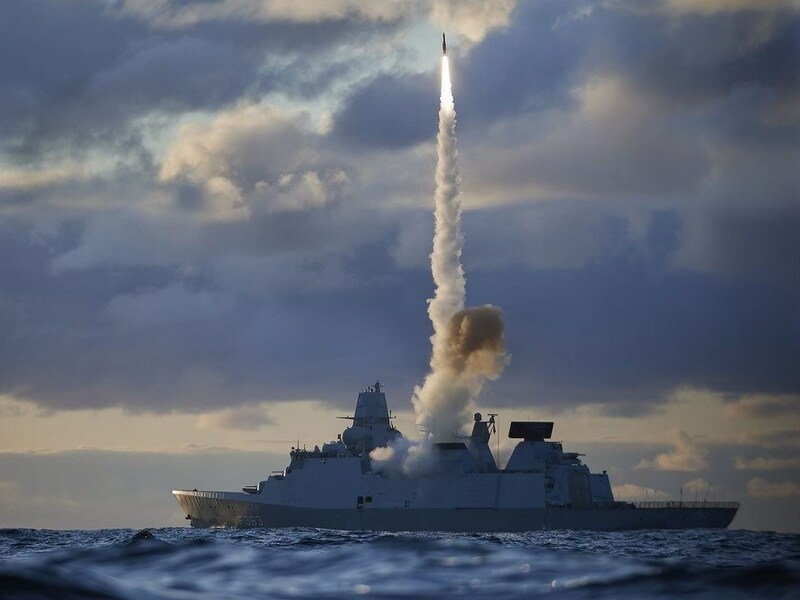 Illustrative Image: Raytheon
The first users of the modernized SM-2 Block IIICU and SM-6 Block IU interceptor missiles will be the navies of the United States, Australia, Canada, Japan, and South Korea.
In Canada’s case, on November 5, 2020, the U.S. Department of State approved the sale of 100 missiles, then designated SM-2 Block IIIC, as part of a package worth up to 500 million USD.
The SM-2 Block IIICU missiles will be integrated into the armament of 15 planned River-class destroyers, the first three of which were ordered on March 10 of this year from Irving Shipbuilding Inc. They will be named HMCS Fraser (III), HMCS Saint-Laurent (II), and HMCS Mackenzie (III). The design is to be based on the Type 26 GCS (Global Combat Ship) frigates, selected under the CSC program on October 19, 2018.
The offer was submitted by Canada’s Combat Ship Team consortium, composed of Lockheed Martin Canada, BAE Systems, CAE, MacDonald, Dettwiler and Associates, L3 Technologies, and Ultra Electronics. The keel laying of HMCS Fraser (III) is planned for this year so that the ship can be delivered to the customer in the early 2030s. The fifteenth and final destroyer is scheduled to enter service by 2050.
