








Defence & Space

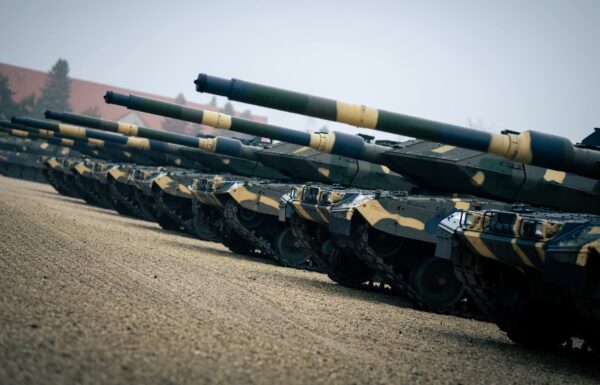
End of Leopard 2A7HU tank deliveries to Hungary

The German company KNDS Deutschland has completed the delivery of 44 Leopard 2A7HU main battle tanks to the Hungarian Ground Forces.

2025-12-21 | Rafał Muczyński | 4 minutes

The Suwałki Anti-Tank Regiment Becomes Another Polish Unit Equipped with the Gladius System

On December 13, the 14th Suwałki Anti-Tank Regiment announced that it had received a Gladius battery module. As a result, it has become the…

2025-12-21 | Radosław Niesobski | 2 minutes

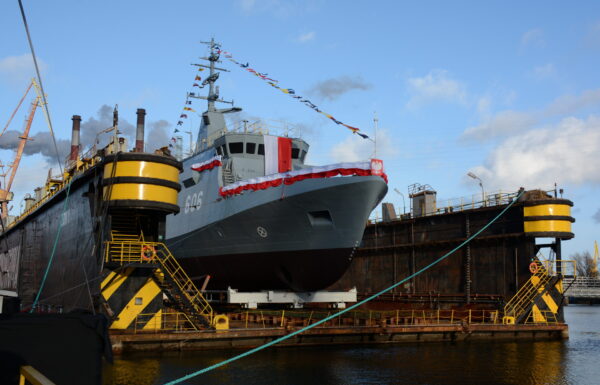
Kormoran II: A Polish Hit We Should Be Selling!

The last of the planned Kormoran II–class mine-hunting vessels for the Polish Navy has been launched. Over the past decade,…

2025-12-21 | Sławek Zagórski | 5 minutes

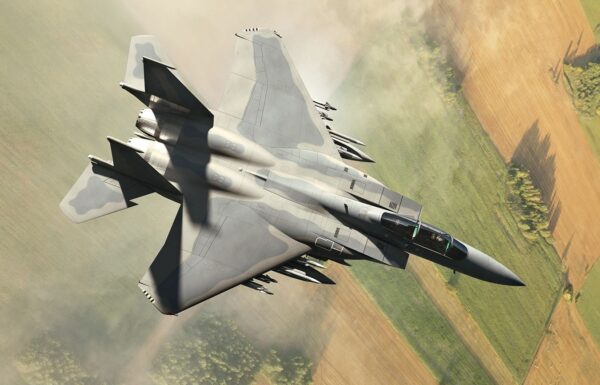
Will Poland need a replacement for MiGs-29

Boeing is offering 32 F-15EX Eagles to satisfy an Air Dominance requirement for the Polish Air Force. Does its still need…

2025-12-11 | Jakub Link-Lenczowski | 4 minutes

End of Leopard 2A7HU tank deliveries to Hungary

The German company KNDS Deutschland has completed the delivery of 44 Leopard 2A7HU main battle tanks to the Hungarian Ground Forces.

2025-12-21 | Rafał Muczyński | 4 minutes

The Suwałki Anti-Tank Regiment Becomes Another Polish Unit Equipped with the Gladius System

On December 13, the 14th Suwałki Anti-Tank Regiment announced that it had received a Gladius battery module. As a result, it has become the…

2025-12-21 | Radosław Niesobski | 2 minutes

Airbus to Integrate Artificial Intelligence into the French Armed Forces’ Information Systems

The European company Airbus Defence and Space has received a 50 million EUR contract to integrate artificial intelligence components into the weapons,…

2025-12-11 | Redakcja | 2 minutes

Polish Company Tantalit Joins the WB Group

The WB Group is strengthening its capabilities in the field of advanced IT and telecommunications systems. The Warsaw-based company Tantalit has…

2025-12-11 | Redakcja | 3 minutes

GEVORKYAN’s Contract with Czechoslovak Group and positive investor feedback at the WOOD & Co Conference

GEVORKYAN participated in the prestigious WOOD’S Winter Wonderland EMEA Conference organized by WOOD & Company and concluded a new, significant contract with the…

2025-12-09 | Redakcja | 3 minutes

Enforce Tac 2026: The leading trade fair fosters dialogue on European security

From February 23 to 25, 2026, Enforce Tac, under the patronage of Federal Chancellor Friedrich Merz, will bring together leading representatives…

2025-12-03 | Michał Ihnatów | 6 minutes

End of Leopard 2A7HU tank deliveries to Hungary

The German company KNDS Deutschland has completed the delivery of 44 Leopard 2A7HU main battle tanks to the Hungarian Ground Forces.

2025-12-21 | Rafał Muczyński | 4 minutes

The Suwałki Anti-Tank Regiment Becomes Another Polish Unit Equipped with the Gladius System

On December 13, the 14th Suwałki Anti-Tank Regiment announced that it had received a Gladius battery module. As a result, it has become the…

2025-12-21 | Radosław Niesobski | 2 minutes

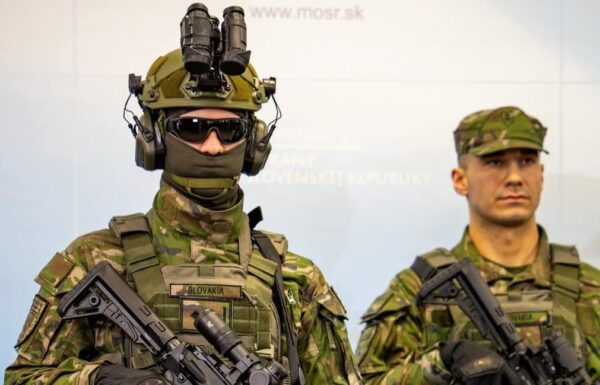
The Armed Forces of the Slovak Republic unveil new camouflage and Grand Power weapons

On 12 December 2025, the Armed Forces of the Slovak Republic (Ozbrojené sily Slovenskej republiky) presented new items of armament and…

2025-12-21 | Krzysztof Kluza | 3 minutes

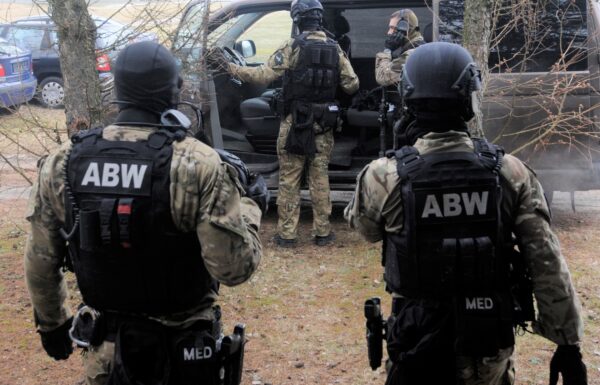
Poland: New information from the Internal Security Agency on the activities of a spy network

The Polish Internal Security Agency (Agencja Bezpieczeństwa Wewnętrznego, ABW) has reported new charges in the case of the activities of a spy…

2025-12-05 | Redakcja | 8 minutes

End of Leopard 2A7HU tank deliveries to Hungary

The German company KNDS Deutschland has completed the delivery of 44 Leopard 2A7HU main battle tanks to the Hungarian Ground Forces.

2025-12-21 | Rafał Muczyński | 4 minutes

The Suwałki Anti-Tank Regiment Becomes Another Polish Unit Equipped with the Gladius System

On December 13, the 14th Suwałki Anti-Tank Regiment announced that it had received a Gladius battery module. As a result, it has become the…

2025-12-21 | Radosław Niesobski | 2 minutes

The Armed Forces of the Slovak Republic unveil new camouflage and Grand Power weapons

On 12 December 2025, the Armed Forces of the Slovak Republic (Ozbrojené sily Slovenskej republiky) presented new items of armament and…

2025-12-21 | Krzysztof Kluza | 3 minutes

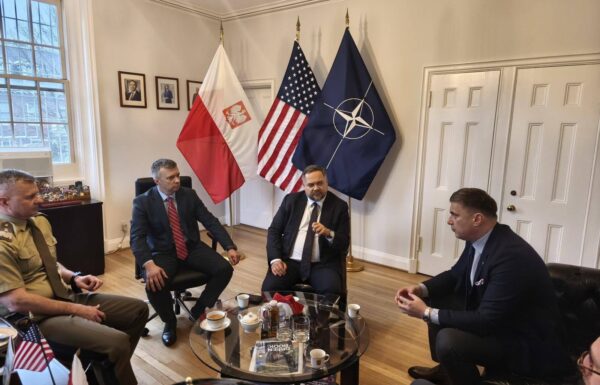
Polish Deputy Minister of State Assets Konrad Gołota visits the USA

Since Friday, 5 December 2025, Deputy Minister of State Assets Konrad Gołota has been on a visit to the United States.

2025-12-06 | Redakcja | 1 minutes

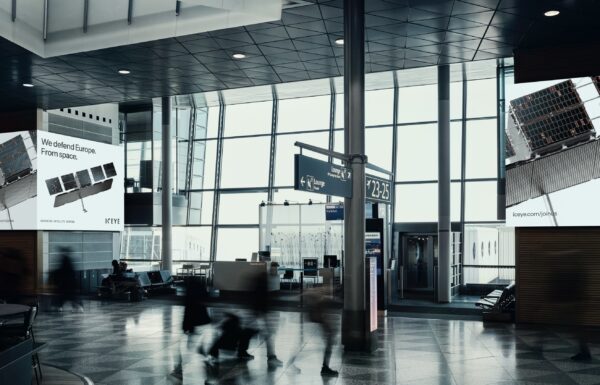
ICEYE and General Catalyst Join Forces to Redefine Satellite Reconnaissance in Europe

The Polish-Finnish company ICEYE is securing new funding, with the General Catalyst fund playing the leading role and broad participation…

2025-12-05 | Redakcja | 4 minutes

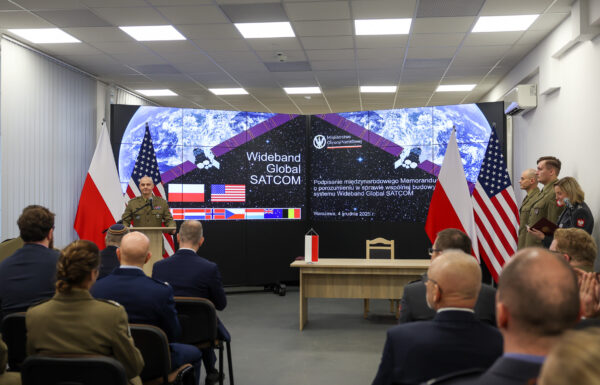
Memorandum on the Wideband Global SATCOM Military Satellite Communications System For Polish Armed Forces

The Polish Geospatial Intelligence and Satellite Services Agency (ARGUS) has signed a Memorandum of Understanding with the United States regarding the…

2025-12-04 | Redakcja | 2 minutes
Shooting

UNI&FORMA (UF PRO) wins FDI Award Slovenia 2025

UNI&FORMA, the company behind the high-performance tactical clothing brand UF PRO, has been recognised with this year’s FDI Award Slovenia in the…

2025-12-16 | Michał Ihnatów | 4 minutes

MSBS GROT Pistol for the U.S. Market

According to Fabryka Broni “Łucznik” Radom, the MSBS GROT Pistol with three barrel variants has received certification from the Bureau of…

2025-12-11 | Michał Ihnatów | 4 minutes

Sightmark Strikon VMP 1–4×22 – a bridge between a red dot sight and an LPVO

Sightmark is introducing the compact Strikon VMP 1–4×22 prism scope. Its compact design, compatible with the Aimpoint Micro mounting standard,…

2025-12-02 | Michał Ihnatów | 4 minutes

New Gun & Shooting Expo to be held on March 3–6, 2026

A new trade show on the Polish event map – from March 3 to 6, 2026, the Gun & Shooting Expo will take place…

2025-12-01 | Michał Ihnatów | 5 minutes

UNI&FORMA (UF PRO) wins FDI Award Slovenia 2025

UNI&FORMA, the company behind the high-performance tactical clothing brand UF PRO, has been recognised with this year’s FDI Award Slovenia in the…

2025-12-16 | Michał Ihnatów | 4 minutes

New Gun & Shooting Expo to be held on March 3–6, 2026

A new trade show on the Polish event map – from March 3 to 6, 2026, the Gun & Shooting Expo will take place…

2025-12-01 | Michał Ihnatów | 5 minutes

EURO TARGET SHOW 2026 – Become Part of the Largest Industry Event in Poland!

On 27–29 March 2026, the next edition of the Euro Target Show will take place at the Poznań International Fair – one…

2025-12-08 | Michał Ihnatów | 6 minutes

Enforce Tac 2026: The leading trade fair fosters dialogue on European security

From February 23 to 25, 2026, Enforce Tac, under the patronage of Federal Chancellor Friedrich Merz, will bring together leading representatives…

2025-12-03 | Michał Ihnatów | 6 minutes

MSBS GROT Pistol for the U.S. Market

According to Fabryka Broni “Łucznik” Radom, the MSBS GROT Pistol with three barrel variants has received certification from the Bureau of…

2025-12-11 | Michał Ihnatów | 4 minutes

Will the Swedish Police Replace the MP5 with the Sako AK24?

According to the portal Polis Tidningen, the Swedish Police have expressed interest in replacing their 9 mm Heckler & Koch MP5 submachine guns…

2025-12-11 | Michał Ihnatów | 10 minutes

SightMark Mini Shot M-Spec M1 V2 – a Complicated Name for Simple, Reliable Gear

The name of this unassuming little SightMark device sounds like the name of a vampire from The Witcher saga: Emiel Regis…

2025-11-26 | Anna Mielczarek | 9 minutes

Mantis TitanX – dry fire training taken to a new level?

Mantis, the American manufacturer of dry fire training solutions, introduces the TitanX – a laser-based training device that replicates a Glock-style pistol…

2025-11-13 | Michał Ihnatów | 4 minutes

Poland: Temporary Ban on Carrying Firearms in Warsaw on November 11, 2025

Minister Marcin Kierwiński has instructed the security services to take measures ensuring safety during the Independence March in Warsaw and other events…

2025-10-30 | Michał Ihnatów | 5 minutes

Over 100% increase in gun permits in Poland in 2024

The Polish Police have released statistical data on firearm permits issued in 2024. An increasing number of Poles now hold a permit, with…

2025-02-20 | Michał Ihnatów | 5 minutes

5 Best Value ATN Rifle Scopes Under €1500

ATN is a leading manufacturer of daytime optics, smart night vision, and thermal vision technology. The innovative features and ergonomic designs…

2022-11-11 | Redakcja | 9 minutes

MILMAG Visits Grand Power

Grand Power is a Slovak manufacturer of the acknowledged good quality firearms. Take part in our guided tour with English subtitles.

2022-05-23 | Redakcja | 1 minutes

SightMark Mini Shot M-Spec M1 V2 – a Complicated Name for Simple, Reliable Gear

The name of this unassuming little SightMark device sounds like the name of a vampire from The Witcher saga: Emiel Regis…

2025-11-26 | Anna Mielczarek | 9 minutes

Upgrading the Classic Glock with a DK ARMS Mounting Plate for a Red Dot Sight

Technology is advancing at a staggering pace. What was a novelty just two, three, or four years ago is now the standard. The same…

2025-09-22 | Karol Szczęśniak | 9 minutes

EOTECH Holographic Sight – History, Technology, Practice

The holographic sight is a device known for nearly 30 years and used by professionals around the world. A favorite sight of many…

2024-09-02 | Michał Gaweł | 12 minutes

Firearms Ownership in the Polish People’s Republic (1945–1989)

The Right to Bear Arms in the Polish People’s Republic

The Presidential Decree of the Republic of Poland of October 27, 1932, titled Law on Weapons, Ammunition, and Explosives (Prawo o broni, amunicji i materjałach wybuchowych), which was discussed in detail in previous article, remained in force until February 10, 1961. On that date, the Act of January 31, 1961 on Weapons, Ammunition, and Explosives came into effect.

The long period during which President Ignacy Mościcki’s decree remained in force, despite the drastic changes in Poland’s socio-political conditions, is explained by commentators as resulting from the fact that it was a modern and comprehensive piece of legislation, thoroughly regulating the subject matter.

The 1945 Regulation

However, changes soon followed. Just one month after the end of World War II, Minister of Public Security Stanisław Radkiewicz issued the Regulation of June 14, 1945, on Permits for Firearms Possession (Monitor Polski 1945, No. 10, item 39), under which all existing permits expired on July 15, 1945. By that date, all firearm owners were required to obtain new permits, issued by the Ministry of Public Security (MBP) as well as by the Voivodeship and District Public Security Offices (UBP). The application had to include, among other documents, a certificate confirming the necessity of possessing a firearm, issued by the highest administrative superior in the province in which the applicant was employed. Those who did not receive a new permit were required within the same deadline to surrender their firearms, ammunition, and old permits, and possession of a weapon without a valid permit was punishable by imprisonment or death, pursuant to Article 4(1)(a) of the Decree of the Polish Committee of National Liberation (PKWN) of October 30, 1944, on the Protection of the State.

The 1947 Regulation

On December 13, 1946, the Minister of Public Security issued a Regulation on Firearms Permits, which entered into force on January 4, 1947 (Monitor Polski 1947, No. 2, item 4). The regulation significantly shortened the validity period of firearms permits (Section 12) – to three months, and in the case of hunting and sporting weapons to six months (in contrast, the 1932 regulation generally provided for a three-year validity period).

Moreover, a permit could be revoked at any time, and the regulation itself did not specify any grounds for such revocation – leaving the matter entirely to the discretion of the authorities. Although the applicant had the formal right to appeal to the Ministry of Public Security (also in cases of non-renewal), given the political realities of the time, this was hardly a meaningful remedy.

Those found guilty of possessing a firearm without a permit were subject to criminal prosecution, facing imprisonment for not less than five years, life imprisonment, or even the death penalty (Article 4 §1 of the Decree of June 13, 1946, on Particularly Dangerous Crimes During the Reconstruction of the State, issued with the force of law by the Council of Ministers and approved by the Presidium of the State National Council).

Article 4 §2 of the decree allowed the court, in less serious cases, to apply extraordinary mitigation of punishment or even waive it entirely. In practice, however, any use of firearms was treated as an act of banditry, regardless of whether it was connected to anti-communist resistance groups or ordinary criminals. The term banditry was frequently used to downplay the political or independence motives behind such actions.

The Citizen’s Militia (MO) implemented a number of measures aimed at recovering firearms, including cash rewards for weapons seized from armed groups or individuals without permits, which resulted in a significant decrease in the number of illegally held weapons. Nonetheless, possession of firearms continued to be labeled as banditry and treated as a serious offense, fostering a deep social aversion to guns.

The regulation also clearly stated that a firearms permit covered both the right to possess and to carry a weapon. However, this did not last long – the provision lost its force just four months later, on April 10, 1947, which in effect must be interpreted as a ban on carrying firearms, unless explicitly authorized by the permit itself.

The 1954 Regulation

Another amendment to the regulation was introduced on May 25, 1955, although, interestingly, it was given retroactive effect from December 7, 1954. The Voivodeship Commands of the Citizen’s Militia (MO) became the authorities responsible for issuing permits to acquire, possess, and carry firearms. In practice, such permits were granted almost exclusively to individuals belonging to the political elite of the time (Judgment of the Supreme Administrative Court in Warsaw of March 9, 1994, case no. III SA 702/93).

The 1958 Regulation

On February 12, 1958, the Regulation of the Minister of Internal Affairs of January 16, 1958, amending the Regulation of March 23, 1933, on Permits for Personal Firearms and on the Acquisition and Disposal of Such Weapons, entered into force. Under this amendment, the requirement to obtain a firearms permit was extended to include air rifles with a caliber of up to 6 mm.

Act Of 1961

This legal framework remained in force until the entry into effect of the implementing regulations to the Act of January 31, 1961, on Weapons, Ammunition, and Explosives, which came into force on February 10, 1961. The act was clearly modeled on President Mościcki’s 1932 decree.

The act did not contain a definition of a weapon. Article 1(1) merely stated that weapons were to be understood as short firearms as well as hunting and sporting guns, though this wording can hardly be regarded as a definition. Similarly, ammunition was defined as ammunition for short firearms, hunting, and sporting weapons (Article 1(2)). Finished or machined essential parts of weapons or ammunition were to be considered weapons or ammunition themselves (Article 1(3)) – a provision directly borrowed from the 1932 regulation (Article 1(3) thereof) and still applicable today (Article 5(1) of the current Act on Weapons and Ammunition). Unlike in the interwar period, however, this provision was no longer motivated by safety concerns over the use of improvised weapons, but rather by the intention to completely prohibit citizens’ access to firearms or their components.

Firearm Ownership

According to Article 4(1) of the 1961 Act, firearms could be possessed only under a permit issued by the Citizen’s Militia (MO) authorities, and such a permit authorized the holder to acquire, possess, and carry the firearm specified therein. Moreover, Article 4(2) explicitly stated that the permit could include a prohibition on carrying the weapon, allowing only its possession and storage in the premises indicated in the permit. Without a permit, it was legal to possess any type of firearm manufactured before 1850 (Article 4(5)).

Issuance of Permits

A firearms permit was issued only when the factual circumstances cited by the applicant justified granting such a permit. Although, in 1994, the Supreme Administrative Court ruled that such a decision was not discretionary, but rather a bound decision – dependent on the presence of positive conditions (factual circumstances justifying the issuance of the permit) and the absence of negative conditions (Article 7(1) of the Act: minority, mental illness, drug or alcohol addiction, lack of permanent residence or established source of income, or concern that the weapon might be used for purposes contrary to state security or public order) – it is difficult to assume that the Citizen’s Militia (MO) authorities during the eras of Gomułka, Gierek, Kania, or Jaruzelski followed such an interpretation in practice.

This is especially true given that discretion could stem both from the positive condition (what does or does not constitute justification for issuing a permit) and from one of the negative conditions (fear that the weapon would be used for improper purposes). Interestingly, the issuing authority also had the right to verify whether the applicant was familiar with the regulations on the handling of the weapon in question (Article 5(2)). The Act further stipulated that persons using firearms for sporting purposes or marksmanship training were not required to obtain a permit, but only insofar as the firearm was used within a shooting range (Article 4(4)(1)).

Arbitrary authority

A characteristic feature of this period in Polish history was that the Citizen’s Militia (MO) was not required to provide justification for a decision refusing to issue a firearms permit, if it was deemed necessary in the interest of state security or public order (Article 8). The revocation of permits was also entirely discretionary. The MO authority could revoke a permit at any time if the factual circumstances justifying its issuance no longer applied, and was obliged to revoke it if it was revealed that the permit holder belonged to one of the categories listed in Article 7(1)—that is, if they met any of the negative conditions.

Bearer’s Permit

The Act also introduced the institution of a bearer’s firearms permit, i.e., a certificate authorizing possession of weapons of any type and caliber. Such a permit could be issued to offices, institutions, plants, and enterprises that required firearms for the protection of their property or the safety of their employees, as well as to schools, sports organizations, military training associations, and other entities for the purpose of marksmanship training (Article 14(1)).

Depositing and Ban on Carrying Firearms

A new provision introduced the authority of the Minister of Internal Affairs to impose, throughout the entire country or in part of it, an obligation to deposit all possessed firearms or a temporary ban on carrying all or certain types of weapons, if required by state security or public order (Article 15(1)). As is well known, the latter measure still exists today. The deposit requirement was invoked during the introduction of martial law, under the Regulation of the Minister of Internal Affairs of December 12, 1981, issued pursuant to Article 15(1) of the Act and Article 21(1) of the Decree of December 12, 1981, on Martial Law. It set a 24-hour deadline for depositing all types of firearms and ammunition at the nearest Citizen’s Militia station.

Punishment

The Act also contained a number of penal provisions criminalizing the unlawful manufacture, possession, or transfer of an air rifle, punishable by up to three months’ arrest or a fine of up to 20,000 złotys (Article 27(1)). The same penalty applied to anyone who violated a ban on carrying firearms, failed to report a change of residence, lent a firearm to an unauthorized person, failed to deposit a weapon as required by the aforementioned regulation, carried a loaded firearm on public transport (in the statutory terminology), or sent explosives by mail (Article 27(2)).

Unlawful disposal of firearms or ammunition, as well as explosives or explosive devices, was punishable by imprisonment for up to three years or arrest for up to three years (Article 28(1)).

It should be remembered that the Decree of 1946 on Particularly Dangerous Crimes During the Reconstruction of the State remained in force until December 31, 1969, which means that, in theory, until that date there still existed the possibility of being sentenced to not less than five years’ imprisonment, life imprisonment, or even the death penalty.

The 1961 Regulation

The Act did not define the essential components of firearms and ammunition, a gap that was addressed relatively soon in the Regulation of the Minister of Internal Affairs of October 19, 1961, on the designation of Citizen’s Militia authorities competent to issue firearms permits, the establishment of permit templates, and the definition of essential components of firearms and ammunition (Journal of Laws 1961, No. 52, item 289). According to §2(1) of the regulation, the essential components of a firearm were considered to be its structural base components, as well as the parts and assemblies enabling a shot to be fired: the barrel, bolt, and receiver. Under §2(2), the essential components of ammunition included gunpowder, primer, cartridge case, and projectiles filled with pyrotechnic material.

The 1986 Regulation

In the mid-1980s, gas sprayers as well as gas pistols and revolvers became increasingly common; however, their possession was not regulated by generally applicable law. On December 12, 1986, the Minister of Internal Affairs issued a Regulation extending certain provisions of the Act on Weapons, Ammunition, and Explosives to pistols, revolvers, and other devices for discharging chemical incapacitating agents, as well as for firing blank or signal cartridges (Journal of Laws 1987, No. 1, item 6). The regulation entered into force on January 16, 1987, and from that date, the possession of such devices required a permit, just like firearms.

The 1987 Regulation

The definitions of essential parts of weapons remained unchanged until 16 January 1987, when a new regulation entered into force that defined them as the frame (receiver), barrel, bolt, and breech. From that date, the essential parts of ammunition were defined as assembled live cartridges and blank cartridges for firearms, as well as the projectiles of those cartridges filled with explosive material or chemical incapacitating agents.

Act Of 1999

The 1961 Act remained in force until March 20, 2000, when it was replaced by the currently applicable Act of May 21, 1999, on Weapons and Ammunition (Journal of Laws 1999, No. 53, item 549). Nevertheless, a gradual, though very slow, relaxation of the government’s approach toward firearms in the hands of citizens could already be observed beginning in 1990. More on that, however, in the next article.

Adam Koper is a legal counsel and runs the Adam Koper Law Office.

Photos: National Digital Archives

Bibliography:
Kasprzak, J., Brywczyński, W. (2013). Nielegalne posiadanie broni i amunicji. Studium prawno-kryminalistyczne. Wydawnictwo Temida 2, Białystok. [Illegal Possession of Firearms and Ammunition: A Legal and Criminal Study]

This article was originally published in MILMAG 07/2018.