



























On Friday, 5 December 2025, the European consortium MBDA and the U.S. company Lockheed Martin announced that, together with the F-35 Joint Program Office (JPO), they have completed ground tests related to the integration of the long-range Meteor air-to-air missile with the F-35A Lightning II multirole aircraft in the conventional take-off and landing (CTOL) variant.
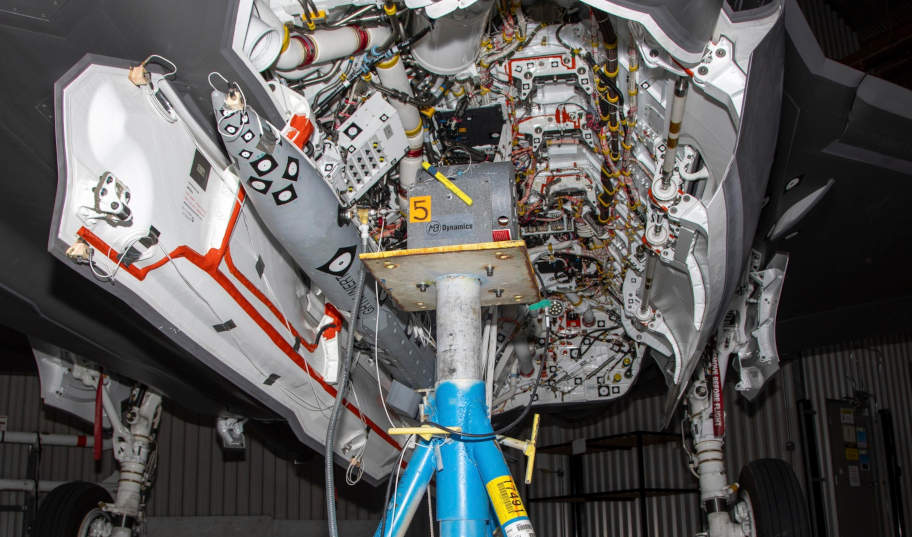 Photos: Lockheed Martin
As stated in the press release, key ground tests within the weapon-integration process with the aircraft were recently completed. While the United Kingdom is leading the integration campaign of the short take-off and vertical landing F-35B with the Meteor missile (a British aircraft flew with the missile in its internal bay on 20 November 2024), Italy is funding the integration effort for the F-35A model (and there are also plans to integrate the missile with Italian F-35Bs).
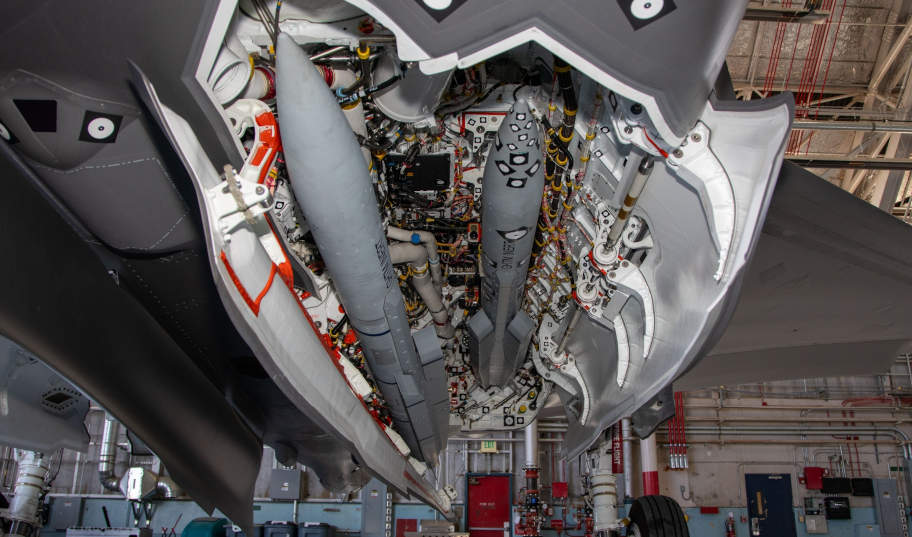
The integration trials are being conducted at Edwards Air Force Base in California and include ground vibration tests, while fit-checks have confirmed the key hardware interfaces between the platform and the missile — a critical step before flight testing can begin. Engineers carefully assessed the data collected during the trials to validate the safe carriage and release of the missile from the F-35A’s internal weapons bay while maintaining the aircraft’s reduced radar cross-section.
One ground test remains before authorization for flight tests can be issued, bringing the program closer to completing integration and beginning certification.
The Meteor missile was developed through the cooperation of Sweden, Italy, Spain, Germany, France, and the United Kingdom. In addition to those countries, it has entered service with the armed forces of Croatia, Greece, India, Qatar, and Thailand, and in the future South Korea and the United Arab Emirates will join this group. Hungary had previously planned to purchase the missile, while Saudi Arabia ultimately abandoned its acquisition plans.
MBDA Meteor missiles can be used in all weather conditions against fighter aircraft, unmanned aerial vehicles, and cruise missiles. The missile is guided by an active radar seeker and equipped with a datalink, allowing it to operate in a network-centric environment and increasing the precision of air operations. It is 3.7 m long, 178 mm in diameter, and weighs 190 kg. It is powered by a throttleable solid-fuel ramjet engine and fitted with both impact and proximity fuzes as well as a fragmentation warhead. As a BVRAAM (Beyond Visual Range Air-to-Air Missile), it can destroy targets at distances of up to roughly 150 km. Based on the Meteor, and in cooperation with Japan, the JNAAM (Joint New Air-to-Air Missile) has been under development since 2016.
🚀✈️ MBDA and @LockheedMartin have successfully completed key METEOR–F-35A ground integration tests, marking a pivotal step toward operational #capability. The programme now moves closer to flight testing and next-generation #aircombat readiness.#METEOR #F35 pic.twitter.com/ntqLCGQ7Pc
— MBDA (@MBDAGroup) December 5, 2025
