



























During the Dubai Airshow 2025 (scheduled for November 17–24) at Dubai World Central–Al Maktoum International Airport in Jebel Ali, United Arab Emirates, the Russian state-owned company OAO Rosoboronexport presented the Pantsir-SMD-E surface-to-air missile system abroad for the first time.
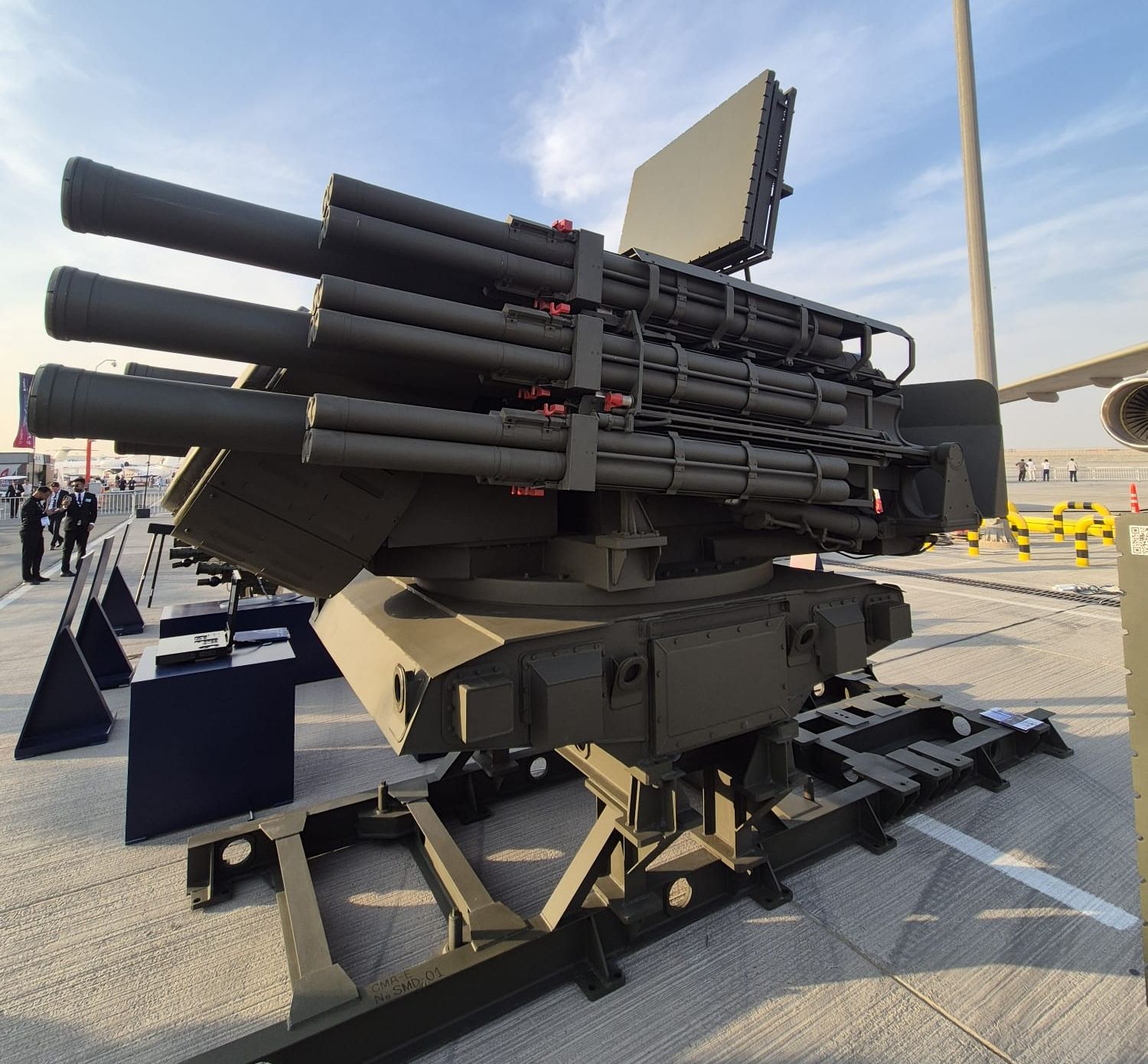 Photo: MILMAG
The system, developed by the A. G. Shipunov Instrument Design Bureau in Tula (KBP Tula), made its debut at the 10th International Military-Technical Forum Army-2024, organized by the Ministry of Defense of the Russian Federation at Patriot Park in Kubinka, near Moscow, from August 12 to 14 of last year. It has now been shown for the first time on the international stage.
This is an entirely new version of the Pantsir family of gun-missile air-defense systems, but without the two 30 mm 2A38M automatic cannons. Until now, the family had been represented by the self-propelled Pantsir-S1, the modernized Pantsir-S1M, the naval Pantsir-M/EM, subsequent upgrades Pantsir-S2/S2E and Pantsir-SM, as well as the Arctic variant Pantsir-SA.
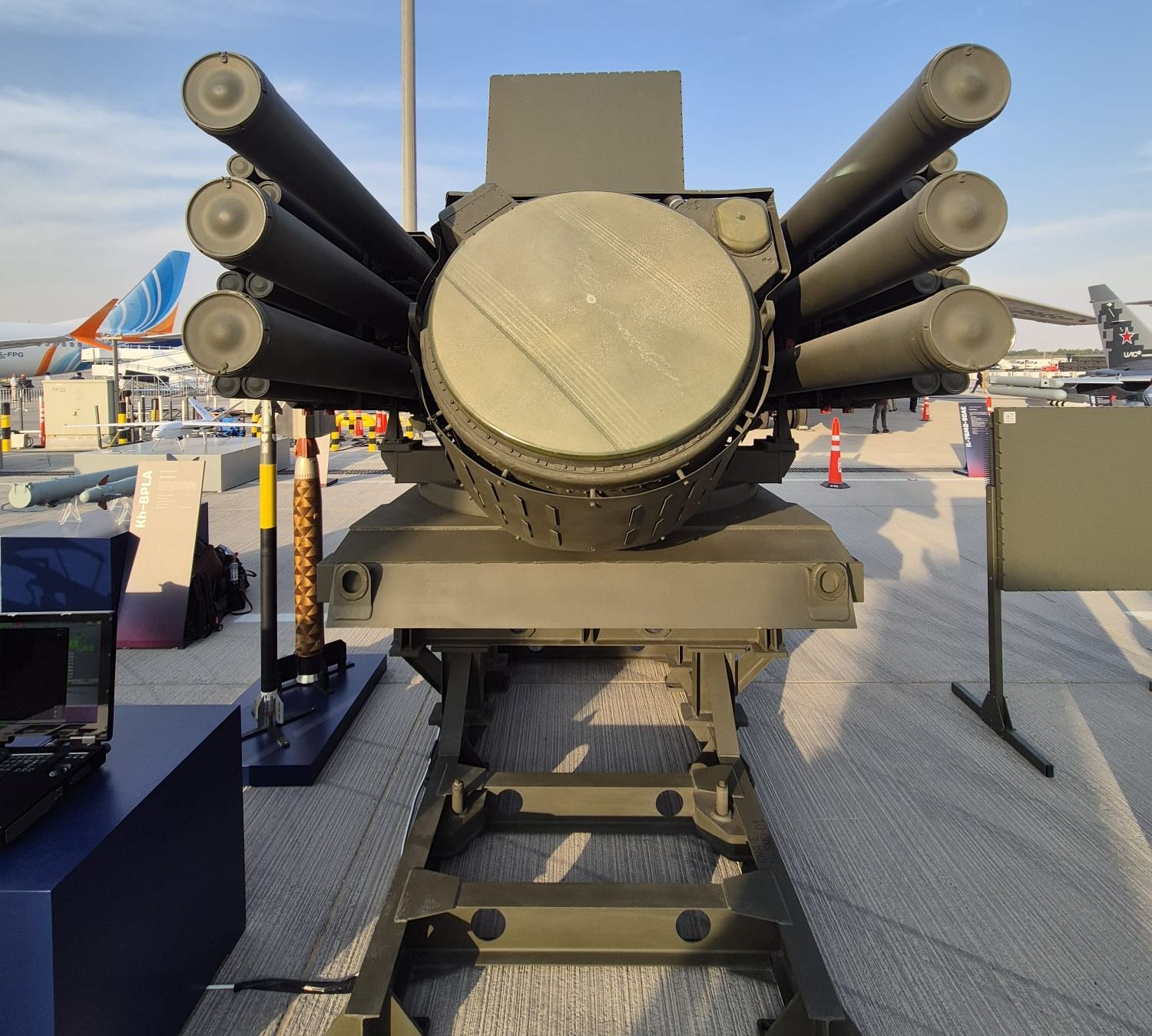
On June 17 of this year, Sergey Chemezov, Director General of the state corporation Rostec, stated in the context of the Pantsir-SMD-E that this system is very important for ensuring protection against drones, because twelve missiles are sometimes not enough in the case of a mass attack. Deliveries for Russian forces were expected to begin in September 2025.
A Pantsir-SMD-E firing unit can be equipped with up to 12 short-range 57E6/57E6-E interceptor missiles with a range of 1,200 to 20,000 meters, or 48 of the new compact TKB-1055 very-short-range missiles with a range of 500 to 7,000 meters and an altitude envelope of 15 to 5,000 meters. The latter are intended specifically for combating unmanned aerial vehicles.
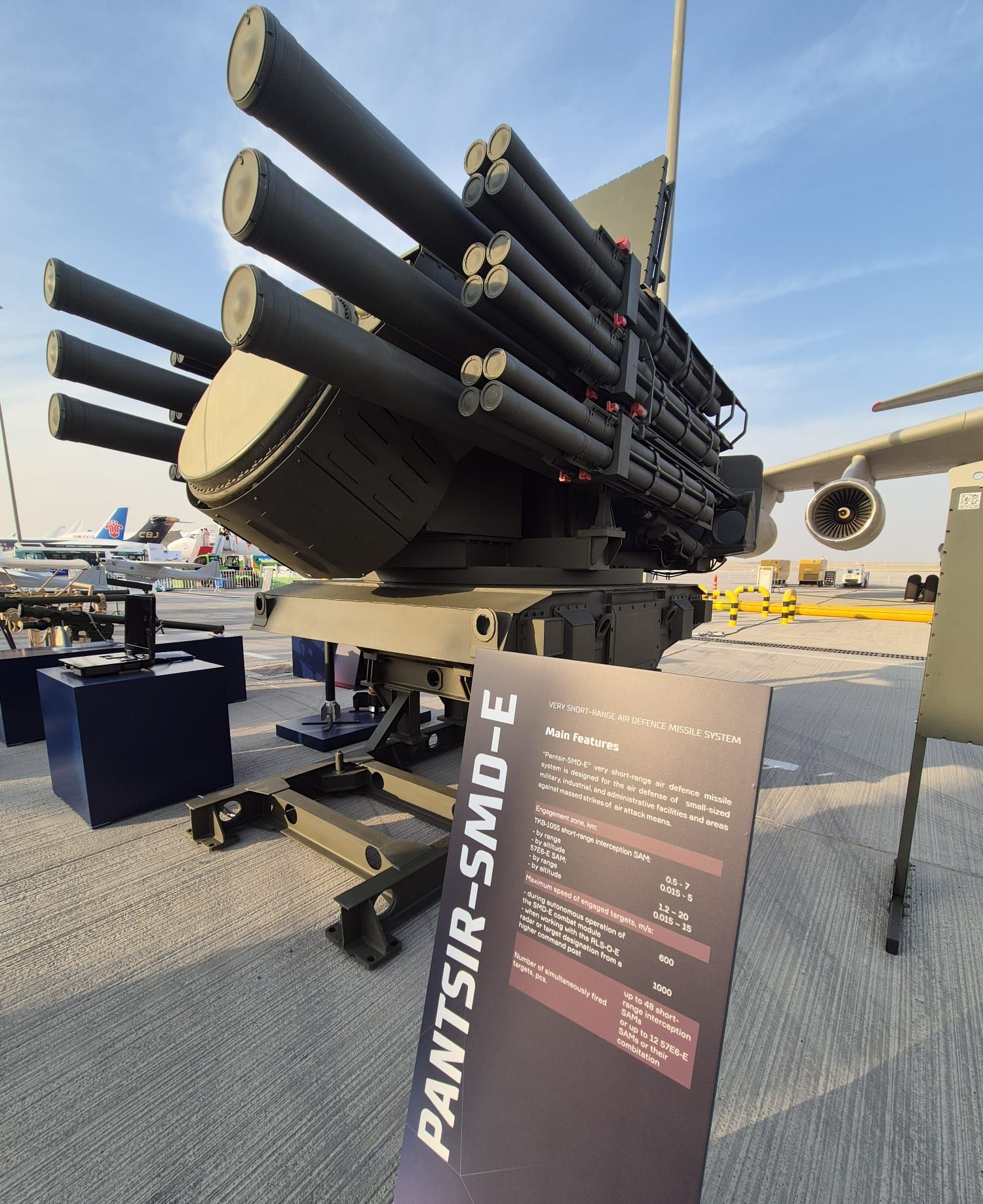
The Russians emphasize that one of the key features of the Pantsir-SMD-E system is its modular design, which enables deployment on various platforms, including stationary installations. The combination and number of missiles of both types can also be configured freely.
With regard to the main sensor, depending on customer requirements, the system can be integrated with the RLS-O-E radar featuring an active electronically scanned array (AESA), operating in the J- or Ka-band. These radars can detect small aerodynamic objects, such as drones, at distances of 5–7 km, and larger targets, such as 122 mm rockets, at distances of up to 10 km. Additionally, the radar system is said to be capable of detecting targets with a radar cross section (RCS) of 1.0 m² at a maximum distance of 45 km.
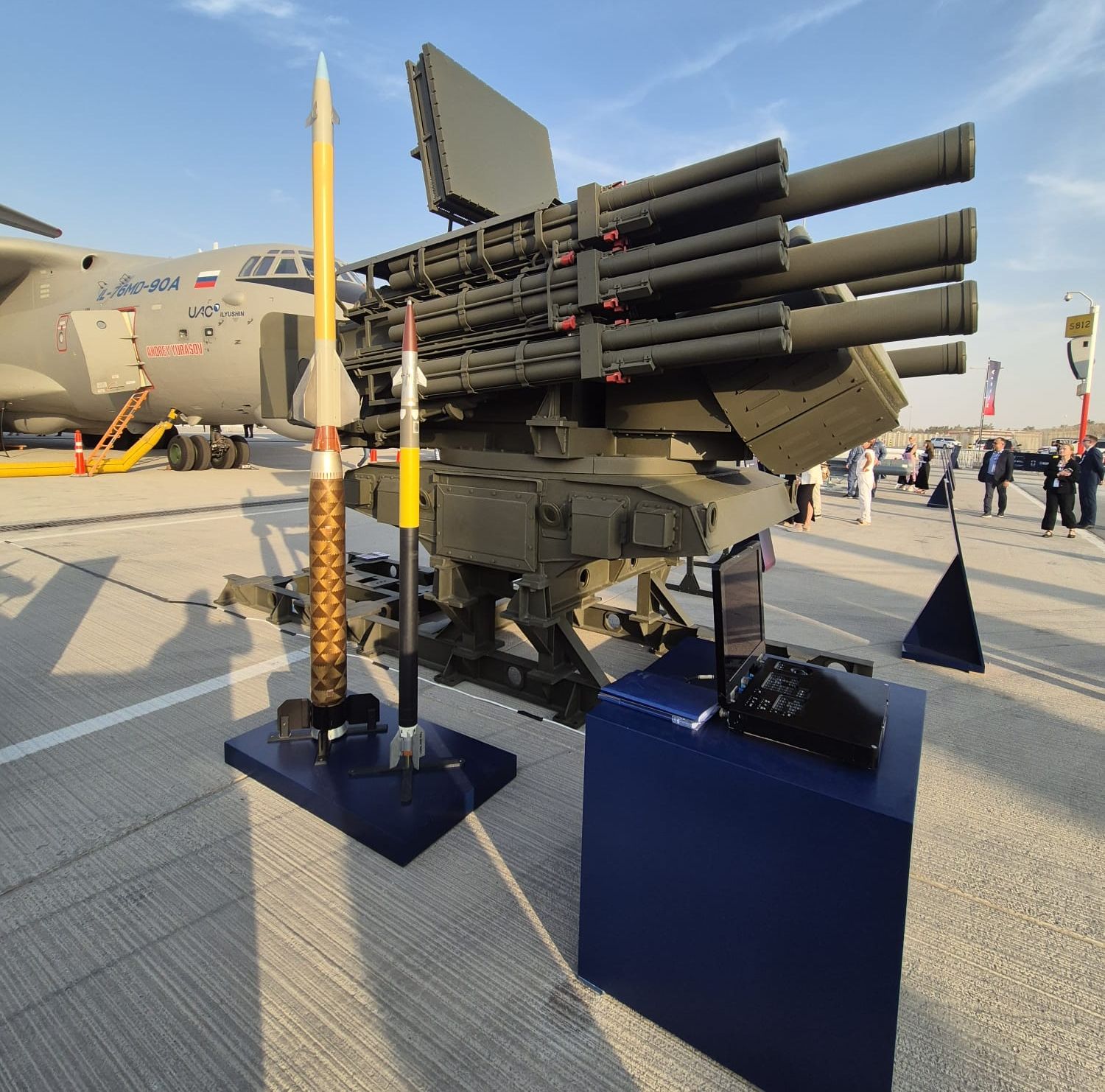
Complementing the system is a millimeter-wave multifunction radar with a phased-array antenna, as well as a multispectral electro-optical station from the 10ES1 family, providing day, thermal, and laser channels for precise tracking.
In the context of deliveries to the domestic military, it is worth noting that Russian sources and foreign analysts have documented how older Pantsir-S1 systems used during the war in Ukraine struggled to reliably shoot down very small unmanned aerial vehicles at long range—particularly when radar detection and the fire-control system were tuned for larger and faster targets such as aircraft or helicopters. In practice, the systems expended large amounts of ammunition, revealing their positions when firing and often forcing crews to wait until Ukrainian drones approached much closer to their positions.
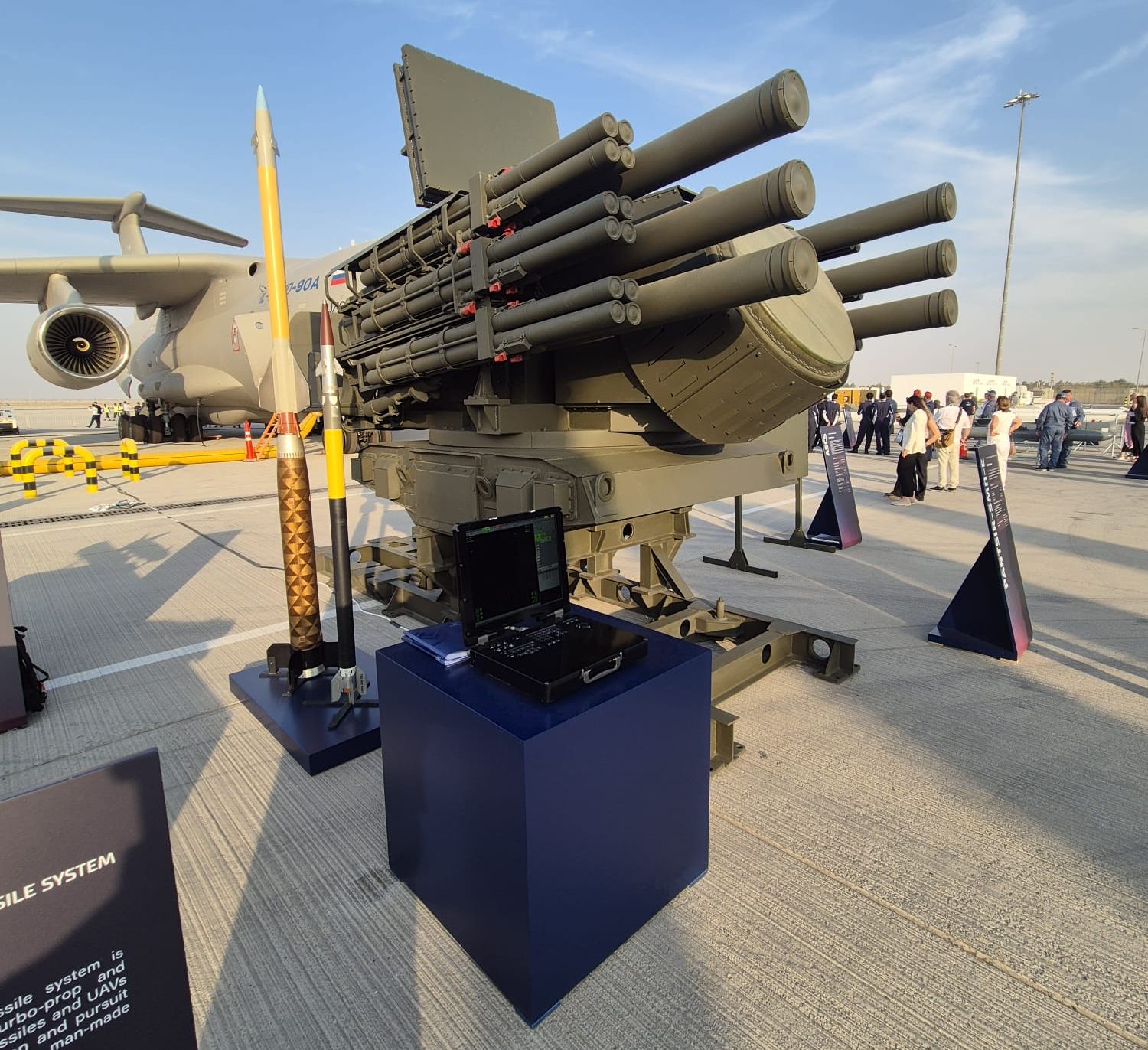
With the introduction of the Pantsir-SMD-E, the engagement range and drone-detection capabilities are increased, and cheaper missile ammunition is used, available in greater numbers within a single firing unit. If these solutions prove effective, for example in operations against Ukraine, the system could become a turning point in the evolution of the Pantsir family.
