























On Thursday, 27 November 2025, the defense procurement agency FMI (Forsvarsministeriets Materiel- og Indkøbsstyrelse, also known under the English acronym DALO – Defence Acquisition and Logistics Organization) at the Ministry of Defence of the Kingdom of Denmark signed a contract worth 500 million EUR with the Norwegian company Kongsberg Defence & Aerospace (KDA) for the delivery of an undisclosed number of NASAMS (National Advanced Surface to Air Missile System) air-defense batteries.
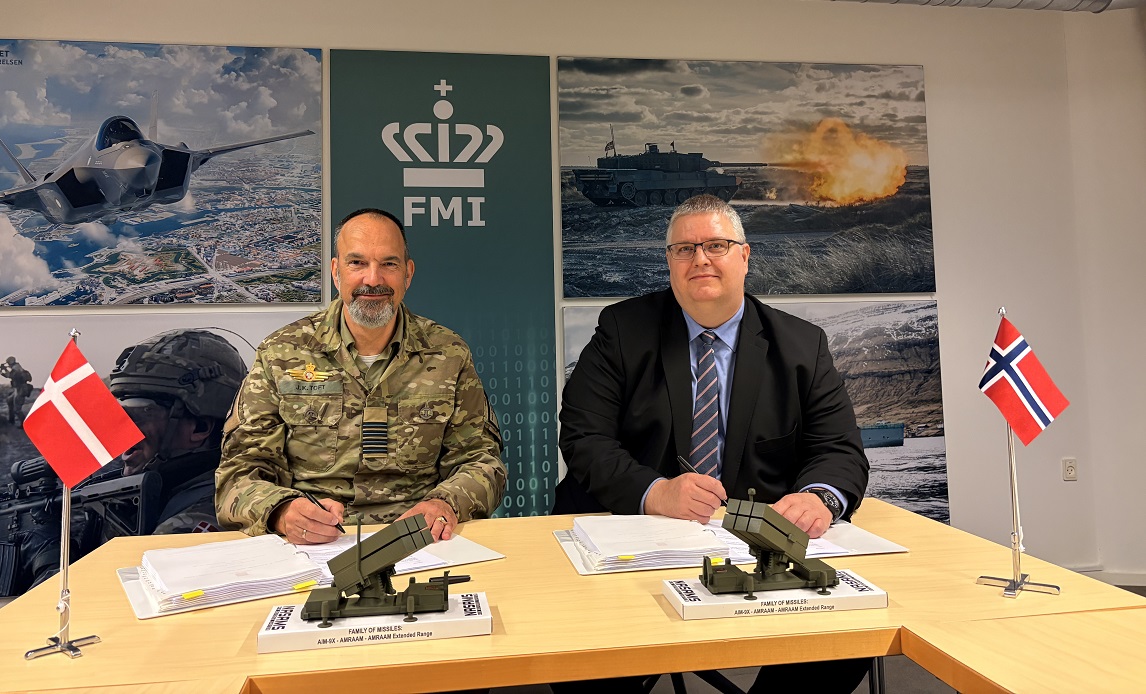 Photo: FMI
As stated in the FMI press release, this is the first contract for a permanent solution in the area of ground-based air defense, since earlier, in July of this year, a decision had been made to lease such systems from the manufacturer as a stopgap measure, along with the purchase of medium/intermediate-range (Jordbaseret Kortrækkende Luftforsvarssystem) missile air-defense systems — the IRIS-T SLM from Germany (Diehl Defence) and the VL MICA from France (MBDA). Later, it was decided that in the long-range ground-based air defense program (Jordbaseret Langtrækkende Luftforsvarssystem), the offer from the French-Italian consortium Eurosam with the new-generation SAMP/T NG air and missile defense system from Eurosam (a consortium of MBDA and Thales) would be selected.
“Today we have reached an important milestone for Danish ground-based air defense. I am very satisfied that we are looking toward a permanent solution with a system that can meet Denmark’s operational needs,” says Colonel Jan Toft, program director for Jordbaseret Luftforsvar.
The acquisition of the above-mentioned systems was necessary. Currently, the Danish Royal Army does not have any missile-based air-defense systems. On September 27, 2024, an order was placed with the German company Rheinmetall Air Defence (part of Rheinmetall AG) for 16 Oerlikon Skyranger 30 gun-missile air-defense systems, which will be integrated onto the GDELS-Mowag Piranha V wheeled armored vehicle platform.
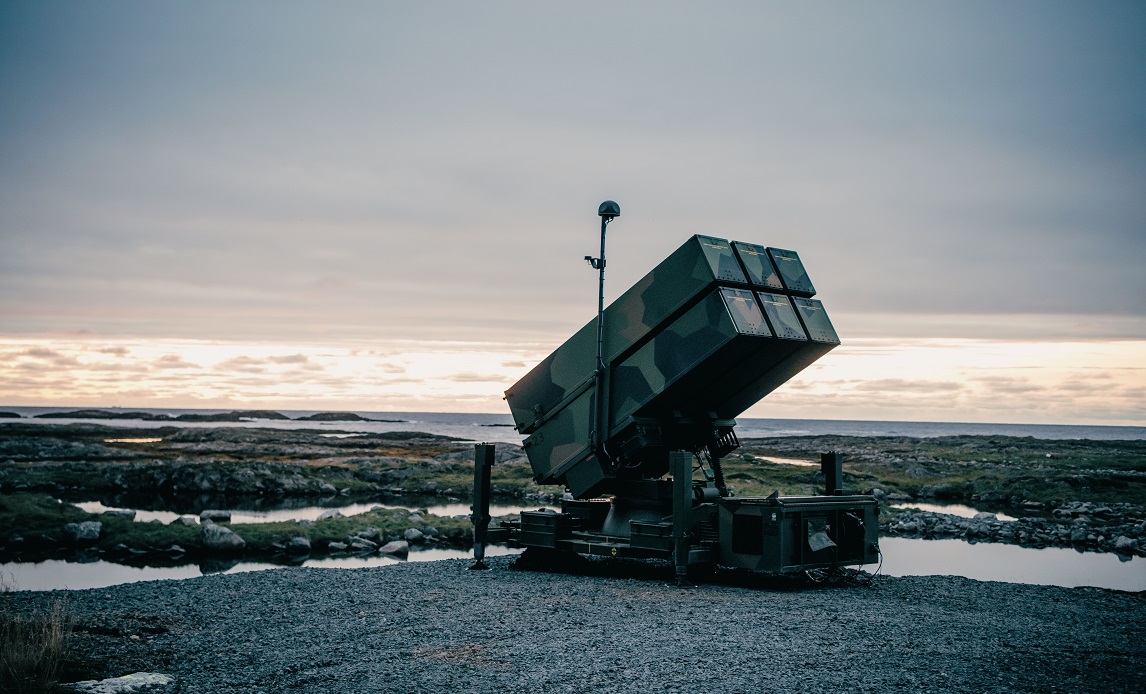 Photo: KDA
NASAMS
A NASAMS battery consists of six launchers, an AN/MPQ-64F1 Improved Sentinel three-coordinate radar station, a command-and-control vehicle equipped with the Link 16 data transmission system, and a vehicle with an electro-optical observation and targeting turret. The effectors are short-range AIM-9X Sidewinder missiles and medium-range AIM-120C AMRAAM missiles, as well as the new long-range AMRAAM-ER variant, which features an increased engagement range from 40 to 80 km and a 70% higher interception ceiling, from 14 to 24 km.
A single battery, operating as part of an integrated air-defense system, can engage up to 36 aerial targets simultaneously, such as aircraft, helicopters, and cruise missiles.
In recent months, mainly due to operational experience with Ukrainian NASAMS systems, several countries have decided to purchase the system: Lithuania (additional batteries), the Kingdom of the Netherlands, Spain (additional), and Norway (additional). The next users will be Belgium, Denmark, Kuwait, Luxembourg, Taiwan, and Egypt. In previous years, the system was purchased by Australia, Chile, Finland, Hungary, Indonesia, Oman, Qatar, and the United States. Slovakia has also expressed interest, and the system was considered in Romania, India, Estonia, Latvia, and Switzerland, but lost to other offers.
See also:
