

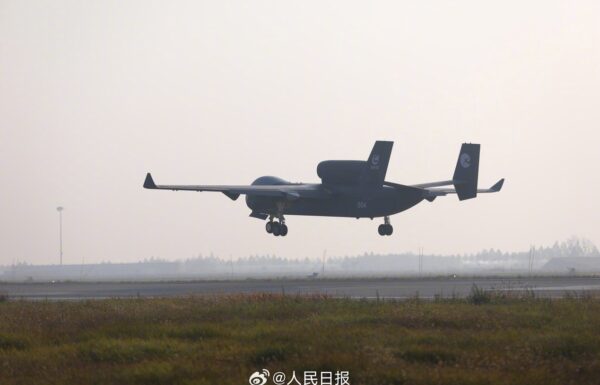



















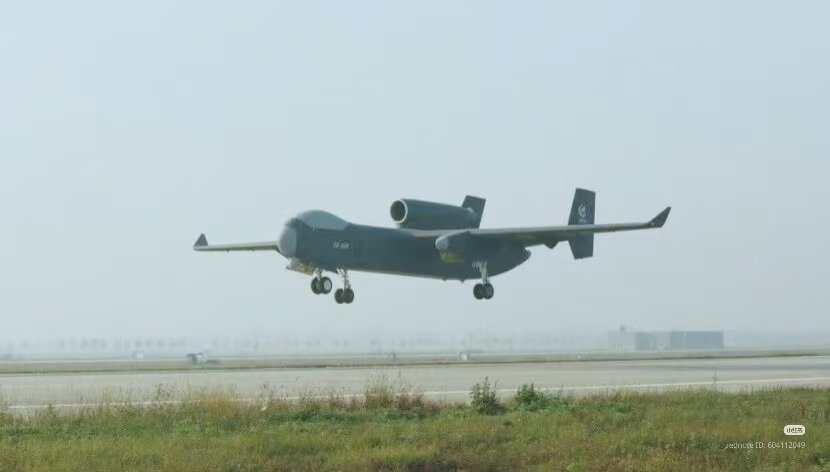
On Thursday, 11 December 2025, the prototype of the Jiutian SS-UAV unmanned “mothership” aircraft (the name means “High Sky” in Mandarin), which was unveiled in May this year, took off for the first time from Weinan Airport in Pucheng County, Shaanxi Province, in north-central China.
 Photos: Chinese Internet
A mock-up of the aircraft, developed in cooperation by the state-owned AVIC (Aviation Industry Corporation of China) as the project lead together with Shaanxi Unmanned Equipment Technology and Haige Communications, was displayed at the 15th China International Aviation & Aerospace Exhibition (Airshow China) in Zhuhai near Hong Kong, held from 12 to 17 November 2024. Seven months ago, it was reported that the maiden flight was to take place by the end of June this year—this did not happen.
As reported, the maiden flight marked the culmination of years of iterative ground testing of prototypes, airframe structural optimization, and avionics integration. The aircraft demonstrated stable performance parameters at high altitudes, confirming the soundness of the airframe design and the payload deployment mechanisms under realistic operational conditions.
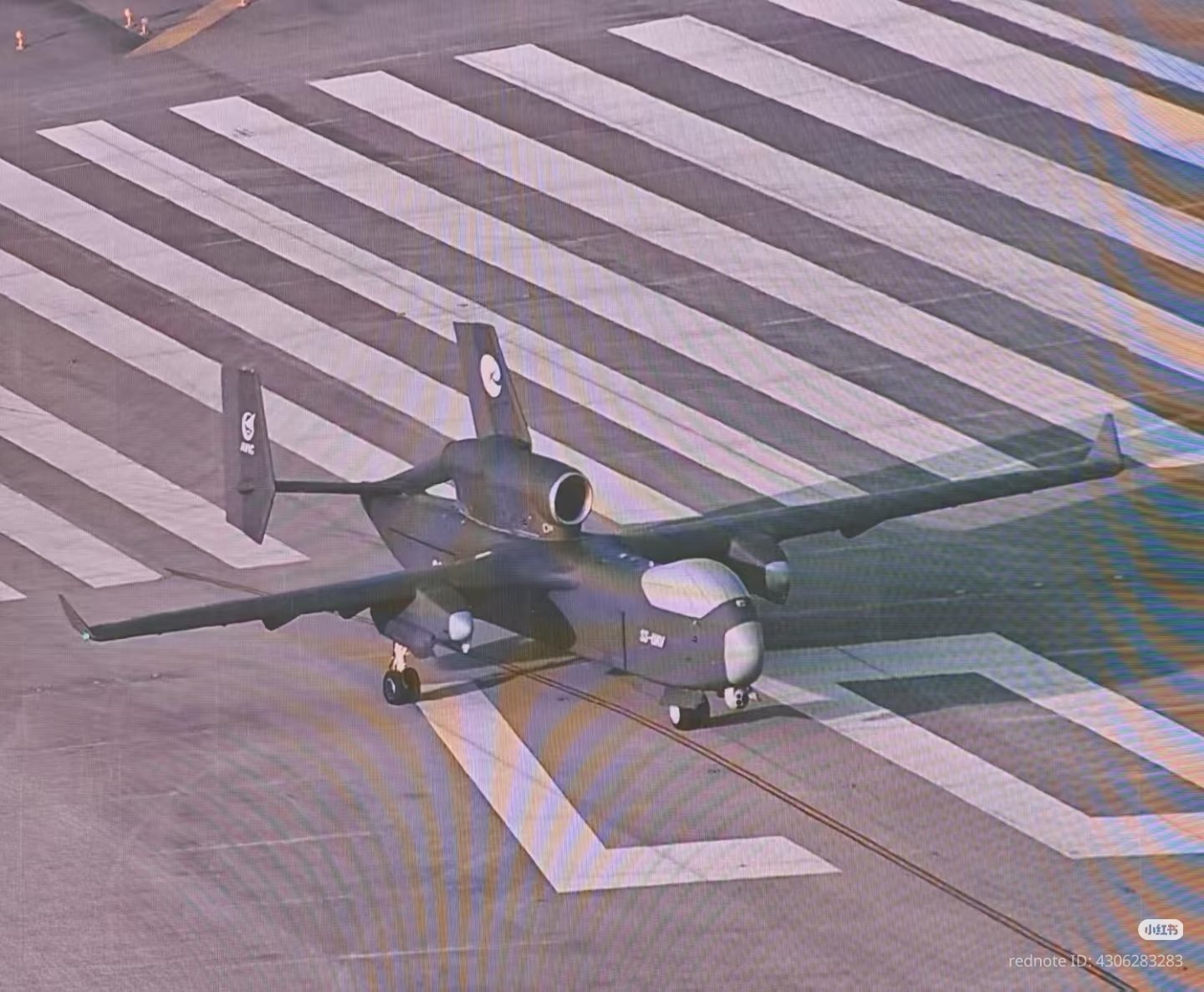
According to publicly released information, the jet-powered Jiutian SS-UAV is expected to have a range of up to 7,000 km (4,350 miles), a service ceiling of up to 15,000 m (50,000 ft), and the capability to carry up to 100 small unmanned aerial vehicles – including loitering munitions, attack drones, reconnaissance platforms, and electronic warfare UAVs – within an Isomerism Hive Module housed in the internal bay and deployed from both sides of the fuselage. In addition, it can carry conventional missiles and various types of munitions on underwing hardpoints, with a total payload of up to 6 metric tons. These may include TL-7/TL-17 anti-ship missiles, PL-11AE and PL-12E air-to-air missiles, LY-V501 glide bombs, LD-8A anti-radiation missiles, and YL precision-guided bombs.
The modular mission bay allows flexible configuration of payloads such as reconnaissance sensors, electronic warfare equipment, or specialized pods. The aircraft is expected to be equipped with communication systems featuring quantum encryption, as well as swarm-control algorithms based on machine learning (artificial intelligence), enabling autonomous operations under conditions of electromagnetic interference.
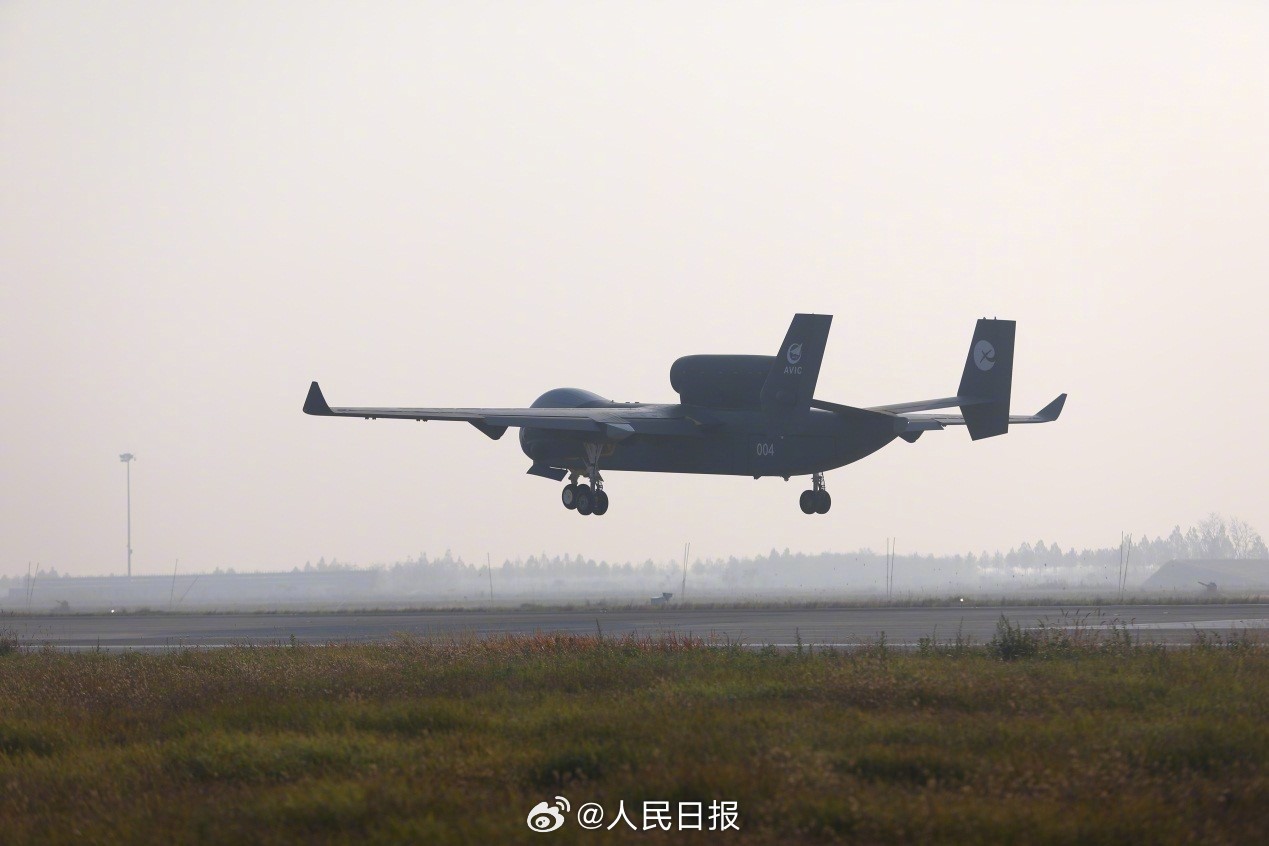
The aircraft has been equipped with radar and electro-optical surveillance systems, including an electro-optical turret with a daylight camera and thermal imager, and potentially an active electronically scanned array (AESA) radar.
The Jiutian SS-UAV has a maximum takeoff weight of 16 metric tons (of which 6 tons is payload) and a wingspan of 25 meters, making it the largest unmanned aircraft designed in China to date, developed for the People’s Liberation Army.
#China‘s new Jiutian unmanned jet just nailed its maiden flight in Shaanxi, bringing heavy lift and long endurance into one sleek platform. With a 6-ton payload, 12-hour endurance (or 7,000 km range) and a modular mission bay, Jiutian can switch from remote logistics and disaster… pic.twitter.com/GU4jwwgeeV
— China Daily (@ChinaDaily) December 12, 2025
— Hûrin (@Hurin92) December 11, 2025
— Hûrin (@Hurin92) December 12, 2025
The „Jiutian“ drone mothership has completed its maiden flight. pic.twitter.com/lN0qMwZb1F
— @Rupprecht_A (@RupprechtDeino) December 11, 2025
See also:
